Showing posts with label Common Buzzard. Show all posts

Monday, 25 January 2016

Exploring Penzance and Mount's Bay

Despite a rather bleak forecast for the day, I decided to join forces with fellow photographers Max Thompson, Jack Burton, Jack Barton and Rhys Kaye, and head down to the coast around Penzance for the day. A few tempting long-staying rarities in the form of Pacific Diver and Hudsonian Whimbrel were enough to give the extra boost of enthusiasm to our day out, despite heroically dipping on both during our visit.

We arrived at Penzance mid-morning, and walked along the shingly beach to Newlyn harbour, scanning through the gathering flock of 150+ Herring, 5 Lesser Black-backed, 30+ Greater Black-backed and Mediterranean Gulls on the beach front. The tide was quite low, which made it difficult to scan the sea for any divers present offshore; nevertheless, we were consoled by a single Great Northern Diver within Newlyn harbour, which was feeding alongside some 10 Cormorants. After brief scan of the gulls in the harbour, we were pleased to come across the smart first-winter Glaucous Gull which has been frequenting the area recently. It gave superb views, being seemingly unaffected by our close proximity, and so we were treated to a good half hour watching the bird here.

We then decided to head over to the far side of Marazion to Prussia Cove, with the aim of walking back along the stunning stretch of coastline in search of the Hudsonian Whimbrel (where it had recently been seen). After a misty and very grey start to the day, the clouds cleared away, the wind eased, and a bright sunny sky prevailed for the afternoon - this allowed temperatures to soar to around 16'C! A comfortable temperature for January...

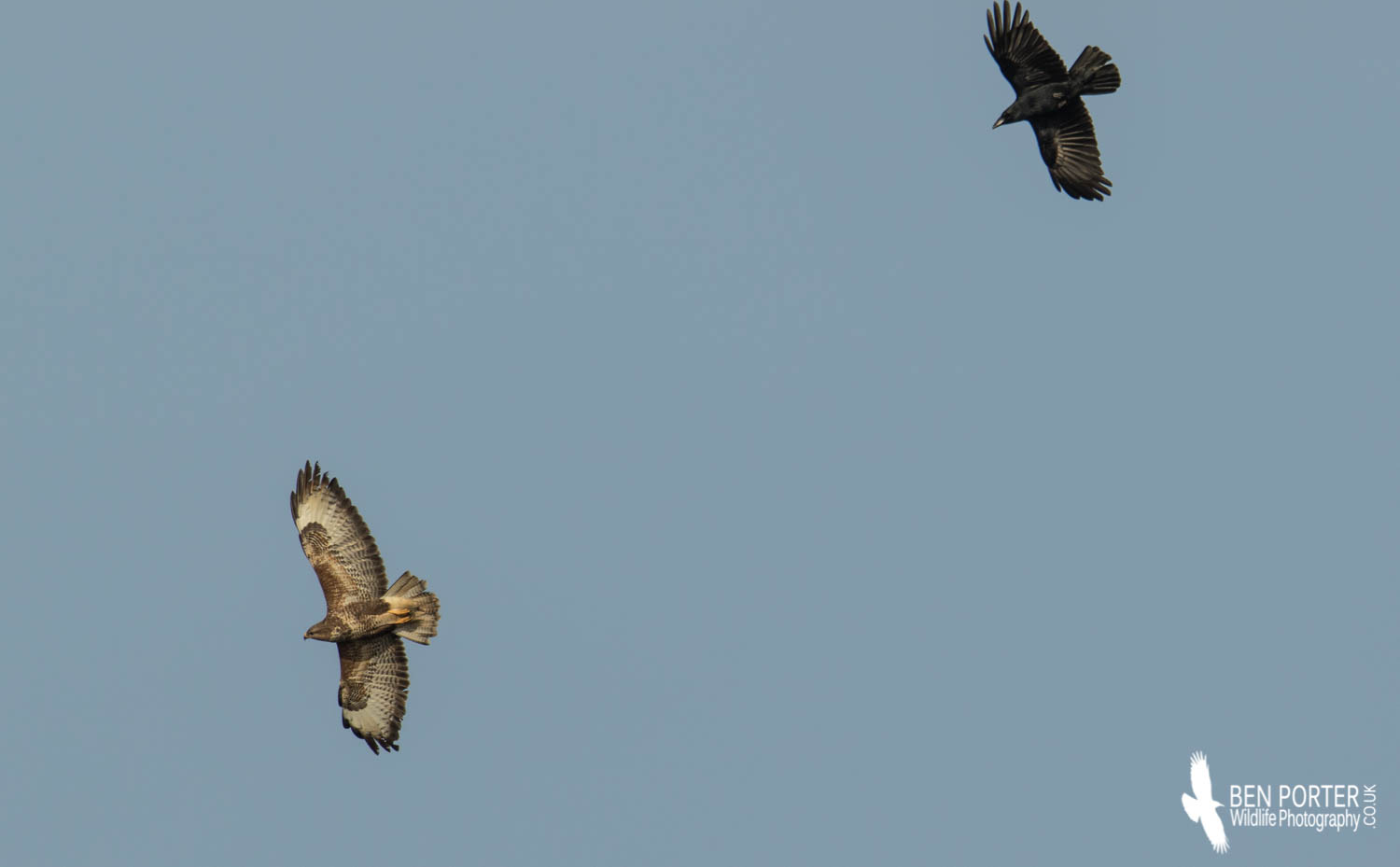
The walk along the coast from Prussia Cove around to Perranuthnoe was stunning - a superb stretch of coastline. There was plenty of wildlife out and about too, with Kestrels hovering overhead, a couple of Black-throated Divers lingering in the bay, a handful of Fulmars eyeing up potential nest sites on the cliffs, and a pair of Buzzards being harried by Carrion Crows. We were surprised not to come across any flying insects, although Gorse Shieldbugs were present in good numbers within the spiky rosettes on the European Gorse bushes. A relatively long hike with several exploratory detours eventually terminated in a characterful little tea shop in Perranuthnoe for sunset. We were then informed that we had been looking in the wrong area for the Hudsonian Whimbrel, and that it was in fact roosting amongst a flock of Curlews further around the coast; a sprint along the coastal path in the dying light of the afternoon saw us desperately scanning the various bays, but no such flock was found. Hopefully we'll have better luck next time!

A great trip in another picturesque part of Cornwall - thanks to Max for the chauffeur service!

Smuggler's Cove, on a ridiculously warm and pleasant January afternoon!


This smart first-winter Glaucous Gull has been frequenting the area around Penzance and Newlyn for the last few days, so it was great to come across it at such close range within Newlyn harbour. Certainly the closest I have been to one of these beasts!

a tame Oystercatcher forages around for some wriggly prey, a fair sight easier than its usual bivalve diet requiring a tactical employment of its stout bill.  This individual actually revealed itself to have a 'stump' as its right leg, although this didn't seem to impede its feeding

Common Kestrel 

A pair of Buzzards along the coast towards Perranuthnoe were being mobbed fairly determinedly by the local Carrion Crows 

St Michael's Mount and Marazion, as the low cloud cleared away

Stackhouse bay, on the way to Perranuthnoe

Perranuthnoe - just a little late for picking out a Hudsonian Whimbrel along the tideline!


Saturday, 21 March 2015

Spring update

Well, its been an exciting few days on the island: on the night of the 16th, we were treated to an amazing display or aurora, with faint green curtains to the north turning into a spectacular scene once a camera and 30 second exposure were taken to it. Yesterday (the 20th), the awesome solar eclipse took place in clear blue skies between 0830 and 1000 in the morning- it was very cool to watch the whole spectacle unfold with the aid of a white light filter, my Dad's telescope and my own camera and lens. The results of the near-total eclipse are pictured below.

Its not just the meteorological side of things that have been interesting- spring is really warming up now, with moths emerging, migrants arriving, and lambs appearing. The first Sand Martins of the year have flown North over the island (18th+19th), and more and more Wheatears continue to arrive, accompanied on the 18th by some 20 Stonechats. Chiffchaffs are starting to sing, and are also increasing in number, along with Goldcrests. Finches have been on the move in the last day or so, with Goldfinches, Greenfinches, Siskins, Lesser Redpoll, Bullfinch and House Sparrow all recorded. A pair of Puffins have been seen off the North End too, which is quite early for their arrival here. Manx Shearwaters are now on the island too, and can be heard every now and then at night. I have uploaded a small selection of images from the last few days: 

This was pretty flipping awesome!! The Northern Lights from Bardsey, with the Celtic Crosses and 13th century Abbey in the foreground

The Solar eclipse was an awesome spectacle, taking place between 0830 and 1000 on the 20th. Using a white light filter in the clear blue skies, it was great to be able to get images of the sun and look directly at it. Towards the end of the eclipse some cloud rolled in and acted as a natural filter (lower image)

Honey Bees have been out collecting pollen from a variety of sources, including gorse and pussy willows (above)

I have had a small heath trap (moth trap) out in the last few days, and on the calmer nights this attracted a small range of species, including classic earlies like Dotted Border, Early Grey, Mottled Grey, Red Chestnut, Hebrew Characters and some micro moths such as Agonopterix heracliana and Emmelina monodactyla 
Hebrew Character

Early Grey

Dotted Border

Common Buzzard

Chiffchaffs have been moving through in decent numbers, although they have not arrived in true force as yet. Its been great to hear a few singing, and feeding in a classic spring setting of these pussy willows

A selection of Wheatear images taken in the last few days around the coast. It has been interesting to see how virtually all the birds at the moment are males. The first two females have only just arrived today (21st), which is over 10 days since the first males arrived on the island. This is presumably so that males can start singing and displaying on territory before the females arrive

Goldcrests

Raven flying in front of Bardsey Lighthouse