Showing posts with label Green Tiger Beetle. Show all posts

Monday, 1 June 2015

May moths and macro shots

Despite the ridiculously unsettled conditions that we are currently experiencing, a few of the smaller inhabitants of the island are just about managing to emerge. It is a very slow spring in terms of moths, with numbers in the moth traps barely struggling into the double figure mark. There are plenty of caterpillars around, such as Six-spot Burnets, Lackeys, Garden Tigers, a Grayling and Yellowtails. I have spent a bit of time taking macro shots of a few insects which I have come across, mainly because it has been very dull on the bird front! It has pretty hard to believe that we are now in June, especially considering that a 45mph wind is currently howling through, accompanied by horizontal rain and temperatures of 4'C with wind chill! Here is a selection of images from the last week or two:


This rather stunning insect is a Ruby-tailed Wasp (Chrysis ignita). It is a species of Cuckoo Wasp, and thus lays its eggs in the nests of other wasp species. The iridescent armour that this species possesses enables it to withstand the strong mandibles and stings employed by other wasp species in defence of the infiltration of a wasp nest. I found at least five individuals around the back of our house yesterday, basking in the (pre-storm) sunshine

This is perhaps my best macro shot yet of the Green Tiger Beetle, although the depth of field could be improved. There are still a few of these beetles stomping around the coast, although generally there seem to be fewer than a few weeks ago. The small holes in earth banks are, however, very obvious- this is where the larvae have their (effectively) pitfall traps

A Scalloped Hazel, amongst a total of three trapped so far this year

Common Marbled Carpets are just emerging

Lackey (moth) caterpillars are pretty cool. Aside their wild hairstyle, this species forms silk 'tents' in its earlier instar stages. Tens of caterpillars hatch out from a clump of eggs, and spin what is known as a tent. This tent contains many different chambers, which are layered from the inside out. Because of the silk's insulating properties, the inside of the tent can be 30'C higher than the outside temperature!! This heat is used primarily during the caterpillar's earliest instar stages, before they become big enough to withstand colder temperatures, at which point they leave the tent and forage on surrounding vegetation independently. 


Garden Tiger caterpillar

Tuesday, 26 May 2015

Spring news

It has been a pleasant few weeks on the island, with a thoroughly mixed bag of weather conditions: most of the time these conditions have not at all been typical of mid-May! Strong winds with horizontal rain; chilly northerly breezes with clear skies and starry skyscapes; and then more recently calm winds, glorious sun and warm temperatures. The unsettled conditions has meant that generally the last few weeks have been very poor for migrant bird numbers on the island. Usually in May we have a few days when the island is covered in Sedge Warblers, Spotted Flycatchers and Whitethroats, but this year we have had much lower numbers- the highest day counts for these species has been 34, 25 and 25 respectively. We have had some good movements of hirundines, with over 1000 Swallows, 300 House Martins and 150 Sand Martins recorded on the 15th. A scattering of Whinchats, Yellow Wagtails, Common Redstarts, Tree Pipits and Reed Warblers has been the best of the rest.
Here are a handful of images from the last week or two:

Puffins are now incubating egss in their excavated burrows on the East Side. There have been around 40 individuals sat on the sea adjacent to the slopes on the last few visits, although there also appears to be a new colony on Pen Cristin this year
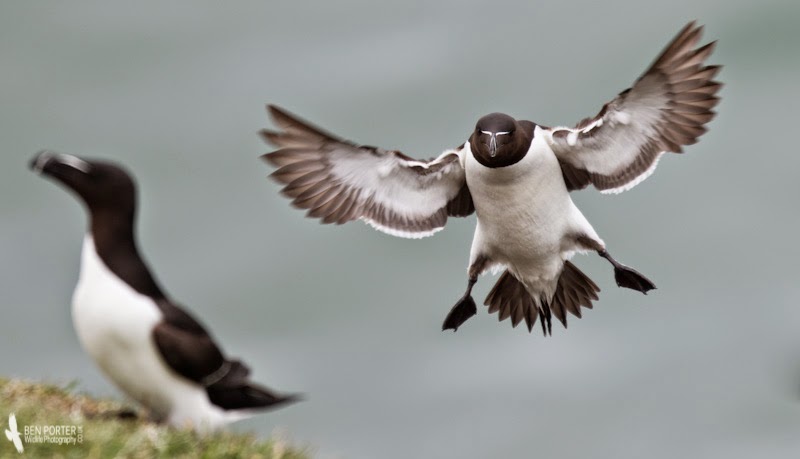
Razorbills are back in force on the island, with well over 1000 present on the rocky bouldery areas around the East Side. Many are on eggs, although we have not been able to see any chicks as yet


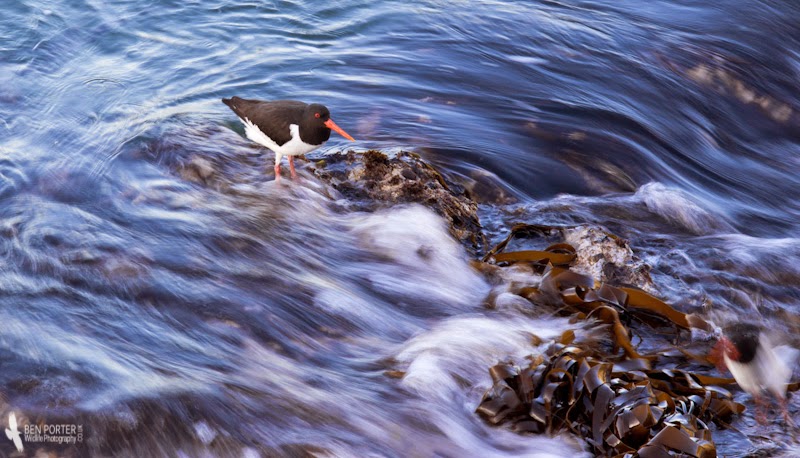
Oystercatchers are incubating too, although the first few nests with 'fledged' young have been recorded, so the birds will now get even more furious when people pass them by

Linnet taking a bath in a small puddle along the track

Green Tiger Beetle

Gorse Shield Bug

Garden Tiger caterpillar

Buff Tip 

Sunday, 17 May 2015

Spring invertebrates

This post is focussed on some of the smaller inhabitants of the island. Spring is a great time of year to see the emergence of a range of insects and reptiles. This year. however, has been a little poor due to the unsettled weather conditions. There are still plenty of things to look at though! 


This handsome beast is a Green Tiger Beetle (Cicindela campestris), and is present around the coast of Bardsey on calm, sunny afternoon. In terms of a UK status, this species is the commonest tiger beetle. They are excellent predators, with running fast at times on their long legs, and making short buzzing flights when disturbed. The larvae develop in small burrows in the earth, which also act as pitfall traps, thus catching unwary prey which happen to fall in

This (not so handsome) insect is a Yellow Dung Fly (Scathophaga stercoraria). It is perhaps one of the most abundant flies in many parts of the UK (and Northern Hemisphere for that matter). The adults hang around fresh faeces, where they breed and lay their eggs within the organic matter on the dung. The adult flies feed on small insects 

Green-veined White. This species is by far the commonest butterfly on Bardsey, and they are beginning to emerge in small numbers on warm days

Moths
This year has generally been very poor for moths, largely due to the unsettled and mostly quite chilly conditions. Moth-trapping has been met with mixed success: often yields have been just one or two, with Hebrew Characters and Flame Shoulders featuring most commonly at the moment. I have trapped a couple of new species for Bardsey in recent weeks, namely a Shoulder Stripe (geometrid) and a Water Carpet (common species in the UK). Marbled Coronets, Common Quakers, Early Thorns and Double-striped Pugs are among the commonest species at the moment

Marbled Coronet

Early Thorn

Early Grey

Shoulder Stripe