Showing posts with label Penzance. Show all posts

Monday, 25 January 2016

Exploring Penzance and Mount's Bay

Despite a rather bleak forecast for the day, I decided to join forces with fellow photographers Max ThompsonJack BurtonJack Barton and Rhys Kaye, and head down to the coast around Penzance for the day. A few tempting long-staying rarities in the form of Pacific Diver and Hudsonian Whimbrel were enough to give the extra boost of enthusiasm to our day out, despite heroically dipping on both during our visit.

We arrived at Penzance mid-morning, and walked along the shingly beach to Newlyn harbour, scanning through the gathering flock of 150+ Herring, 5 Lesser Black-backed, 30+ Greater Black-backed and Mediterranean Gulls on the beach front. The tide was quite low, which made it difficult to scan the sea for any divers present offshore; nevertheless, we were consoled by a single Great Northern Diver within Newlyn harbour, which was feeding alongside some 10 Cormorants. After brief scan of the gulls in the harbour, we were pleased to come across the smart first-winter Glaucous Gull which has been frequenting the area recently. It gave superb views, being seemingly unaffected by our close proximity, and so we were treated to a good half hour watching the bird here.

We then decided to head over to the far side of Marazion to Prussia Cove, with the aim of walking back along the stunning stretch of coastline in search of the Hudsonian Whimbrel (where it had recently been seen). After a misty and very grey start to the day, the clouds cleared away, the wind eased, and a bright sunny sky prevailed for the afternoon - this allowed temperatures to soar to around 16'C! A comfortable temperature for January...

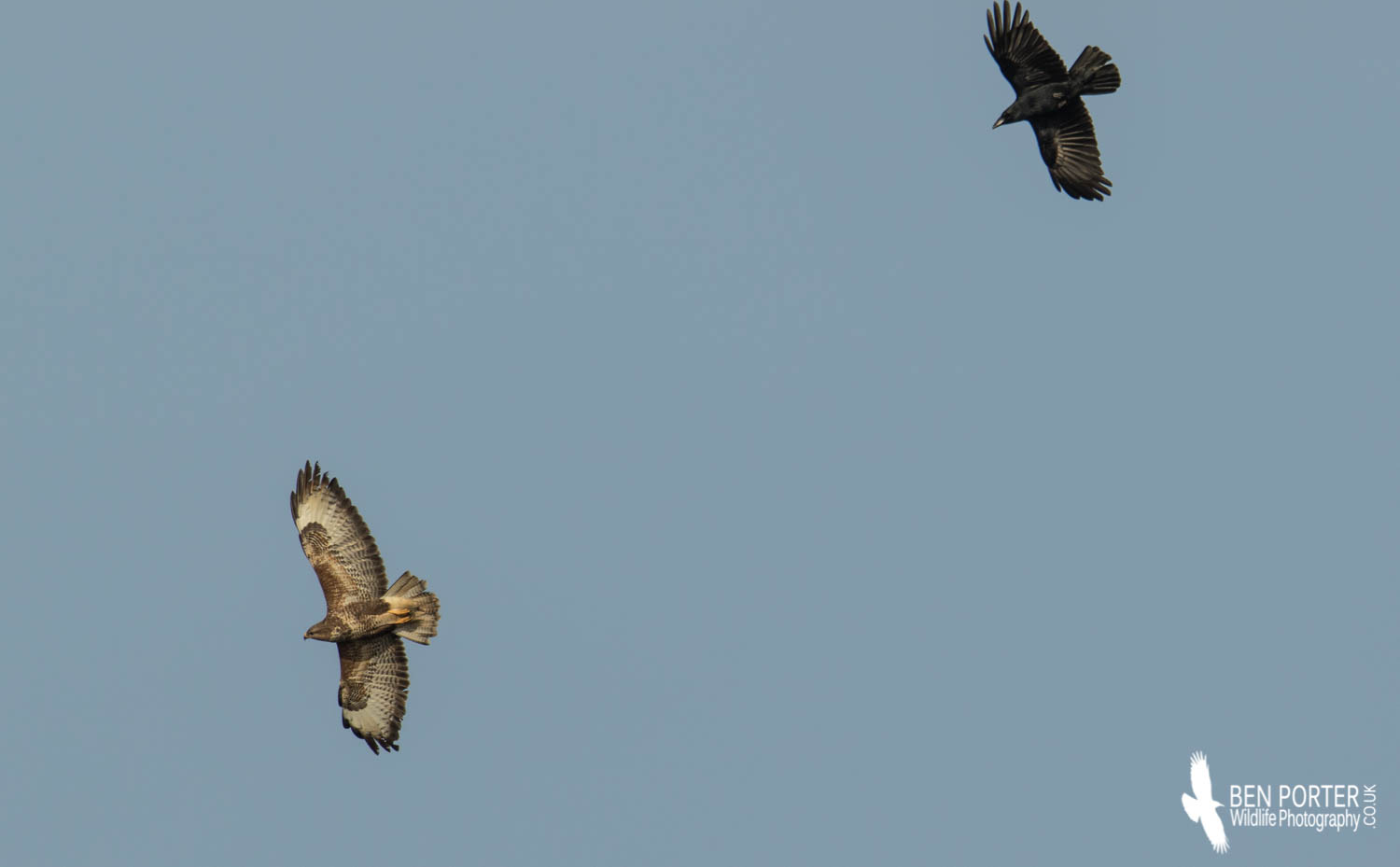
The walk along the coast from Prussia Cove around to Perranuthnoe was stunning - a superb stretch of coastline. There was plenty of wildlife out and about too, with Kestrels hovering overhead, a couple of Black-throated Divers lingering in the bay, a handful of Fulmars eyeing up potential nest sites on the cliffs, and a pair of Buzzards being harried by Carrion Crows. We were surprised not to come across any flying insects, although Gorse Shieldbugs were present in good numbers within the spiky rosettes on the European Gorse bushes. A relatively long hike with several exploratory detours eventually terminated in a characterful little tea shop in Perranuthnoe for sunset. We were then informed that we had been looking in the wrong area for the Hudsonian Whimbrel, and that it was in fact roosting amongst a flock of Curlews further around the coast; a sprint along the coastal path in the dying light of the afternoon saw us desperately scanning the various bays, but no such flock was found. Hopefully we'll have better luck next time!

A great trip in another picturesque part of Cornwall - thanks to Max for the chauffeur service!

Smuggler's Cove, on a ridiculously warm and pleasant January afternoon!


This smart first-winter Glaucous Gull has been frequenting the area around Penzance and Newlyn for the last few days, so it was great to come across it at such close range within Newlyn harbour. Certainly the closest I have been to one of these beasts!

a tame Oystercatcher forages around for some wriggly prey, a fair sight easier than its usual bivalve diet requiring a tactical employment of its stout bill.  This individual actually revealed itself to have a 'stump' as its right leg, although this didn't seem to impede its feeding

Common Kestrel 

A pair of Buzzards along the coast towards Perranuthnoe were being mobbed fairly determinedly by the local Carrion Crows 

St Michael's Mount and Marazion, as the low cloud cleared away

Stackhouse bay, on the way to Perranuthnoe

Perranuthnoe - just a little late for picking out a Hudsonian Whimbrel along the tideline!


Sunday, 29 November 2015

Pacific Diver!

Last Thursday I met up with fellow young birders and photographers Lisle Gwynn, Max Thompson and Jack Barton to head down to Penzance and see what we could find/photograph. We headed off in the early afternoon, with grey clouds looming overhead and the threat of rain. Nevertheless, we continued on down to Penzance and headed to the rocky point where Purple Sandpipers can often be found at close range. It was high tide, which boded well for finding this smart little waders, but unfortunately a lone Turnstone was all that remained besides the harbour. Unfazed, we scanned the surrounding sea and horizon to see if any wildfowl or seabirds were present in the bay....

There wasn't a great deal to see, aside a few distant Gannets, a flock of Common Scoters, and a lone diver. At a fair range, it looked Great Northern Diver-esque to me, but then we saw what were definitely Great Northerns a little beyond this bird, and realised that this was actually a Black-throated, with a more slender build and compact body. Lisle, knowing the area better than me, mentioned the fact that the Pacific should be returning soon, which spurred us on to try and ascertain a positive ID on this bird. Unfortunately, the diver had other ideas in mind, and proceeded to appear and re-appear in increasingly more distant locations, always seemingly with its back to us.

After a little while we lost the bird altogether, but scanning back towards the seafront in Penzance I picked it up again, this time much closer in. We scurried around and along the promenade, eventually moving close enough to get some reasonable views, where we could clearly see the absence of any white flank patch, and... a chinstrap! Just about visible on Max's images with his monster 500mm f4. We walked even further along the seafront, until the bird wasn't too far away at all, and we proceeded to watch it feeding. The features of Pacific Diver were now much more apparent, and we were all pleased to connect with this superb bird, which seems to have been returning to this area for perhaps seven years!

The Pacific Diver

After happily viewing the diver for a good hour or so, we headed over to the nearby Marazion marsh to witness the brilliant Starling roost that takes place in the reed beds most winter nights. The first undulating flocks arrived around 4pm, and gradually increased in number until around 8,000 birds were visible. We were treated to some cool murmurations, and the amazing sight of seeing 8,000 Starlings pile into an area of reed bed the size of a tennis court! It is always a pleasure and privilege to witness this awesome avian display of coordination and maneuverability.  

Here are a handful of images:


And finally, a few random shots to end this blog post...

Firecrests seem to be everywhere at the moment! There have been up to four individuals on campus, with this bird even landing on the roof of one building! I have been seeing up to three birds around the nearby College lake, and a minimum of three at Swanpool too!

Black-headed Gull at sunrise in Swanpool

 Woodpigeon