Showing posts with label Spain 2015. Show all posts

Friday, 1 May 2015

SPAIN 2015 - PART 3: Macro Photography

Beside the avian wildlife that we were primarily observing during our visit to Spain, we discovered a wealth of pretty awesome invertebrates, reptiles and amphibians, as well as some beautiful plants. A special thanks has to go to Jonnie Fisk and James O'neill, who were the primary rock-turning investigators during our trip, and discovered a large number of the species pictured below. It was great to see such a diversity, from scorpions to salticid spiders...


Fiddler Crabs are found along sea beaches, brakish intertidal mudflats, lagoons and swamps. They are a very distinctive genus of crabs, where all the males have one major claw (called the Chela) much larger than the minor claw. They use these in combat and courtship over a female, and also to communicate via a series of waves and gestures. The females' claws are both the same size.


The common wall gecko, or Moorish Gecko (Tarentola mauritanica) is said to be the largest gecko in Europe, and its distribution stretches throughout 13 different countries in Europe and Africa. It has also been introduced to Argentina, the US, and Uruguay.


The Ocellated Lizard (Timon lepidus) is Europe's largest Lizard, being able to grow to 90 centimetres long! It gets its name from the yellow and blue ocelli on the sides of its body. This species feeds largely on insects, but will also take snails, small vertebrates and even berries


One of the great highlights of the trip was watching this male Dung Beetle proudly rolling its perfect sphere of dung to its home, while the female tagged along not far away as if giving directions. Dung Beetles are corprophagus insects which feed on the excrement of other animals. The beetles often roll a ball of dung to their nests to feed their young within. One of the fascinating things about this family is that research has shown that a certain species in Africa uses the night sky (particularly the milky way) to navigate back to its nest once they have carved out a ball of dung from a deposit some way away 

This is a Jumping Spider (family Salticidae), of the species Menemerus semilibatus. There are about 5000 species worldwide, thus making it the largest family of spiders. These Salticids are said to have some of the best vision amongst arthropods which they use to hunt, as well as in courtship and navigation. The Jumping Spiders are able to jump due to a well-developed internal hydraulic system, which causes extension of the limbs by altering the pressure of body fluid within them. They are fascinating creatures

We only saw the only scorpion during our visit to Spain, which was found underneath a rather larger boulder (as was virtually every other insect or reptile we saw during out trip). There are about 1750 species described worldwide, and just 25 of those carry venom capable of killing a human. This species, thankfully, was not among them


This stunning little beastie is a Horshoe Whipsnake (Hemmorrhois hippocrepis). This species is found throughout the south coast of Spain, as well as along the whole Mediterranean coastline. We found this individual slithering across a dry crop field near Osuna

This rather smart amphibian is a Fire Salamander. They are so named after a habit that they supposedly had of hiding in logs chopped for burning, and then fleeing out once the logs were placed upon a fire. The larvae of this species are entirely aquatic, living in shallow pools and lakes, whilst the adults are terrestrial: they only return to water bodies for breeding. We found this near a small pond on the ridge of Cierra de la Plata

Some butterflies seen during our visit:
Provence's Hairstreak: a target species for many of us on the trip, which we first saw in the high mountainous region of Sorcio, but subsequently also found at the coast near Tarifa

Spanish Festoon- arguably the prettiest species we saw during our visit, which was present in a variety of places

Painted Lady. This is a migrant species that winters in the Mediterranean region and further south to North Africa. We saw hundreds during our visit to Spain, including some days where there were significant movements, such as at Tarifa.

Praying Mantis

Beetle sp.- Fire Beetle?

Snail

Sand Lizard with accompanying fly.

And finally, here are some flowers:

Sawfly Orchid

Tongue Orchid

Yellow Bee Orchid

Wednesday, 22 April 2015

SPAIN 2015- PART 2: Raptors

It time for the second instalment of my three-part blog on the recent trip to Spain which I took part in. This particular post is focussed on raptors- a family of species which featured quite widely in our travels within the country. Several of our raptor sightings and experienced were actually the highlights of the trip for many. Here

Lesser Kestrel
This species was relatively common over a variety of different locations. For a start, there was a large breeding population in the village that we were staying in- every morning there would be a flock of as many as 60 birds flying around, and many would do low fly-bys over the top of our villa roofs. We could see several nesting holes, and witnessed some cool behaviour such as copulations. Aside the village, we saw many in open farmland areas, and old abandoned buildings. We also saw a few passage birds, such as our day at Tarifa on the coast, when over 10 birds came in off the sea with a few Common Kestrels.


Griffon Vulture
This was another fairly common species on our trip, with birds appearing virtually all over the place. Our first morning in the country was particularly memorable, when we discovered that there was a carcass about 3 kilmoetres from our village, and during the space of an hour or so, we saw tens of birds flocking from all over to gather at a carcass not far from the motorway. There were about 200 birds in this gathering, with over 70 alone squabbling over the meal. Elsewhere, we had plenty of birds up in mountainous area such as Alcorocales (a scattering of flocks amounting toc. 210 birds), Sorcio and Llanos de Libar (movement of birds overhead of about 45 birds). We also visited a rocky outcrop of cliffs called Cierra de la Plata, where there were several birds on nests. On our last day in Spain, our visit to Tarifa produced a few migrant birds coming in off the straits. In the space of about 30 minutes, we saw a flock of 65 birds head north east along the cliffs, followed by a further 18.


Montagu's Harrier
When we travelled inland towards the rolling fields of barley, we discovered quite a few of these handsome circuses. The best place for this species during our trip was at Osuna, where we had perhaps 5 males and 5 females all flying around together in a small area, where it seemed likely that they were nesting. On our day at Tarfia, we also had two birds come in off the straits and head inland.


Booted Eagle
By far the commonest eagle around, we had birds all over the place during our travels. Partcilarly good places for this species included Tarifa, where it was a numerous migrant coming in off the sea (a total of around 150 were noted during our day at this site); Llanos de Libar in the mountains was a great place, where a passage of birds took place high over the peaks, amounting to some 50 birds; many birds were also seen over the coastal areas of pine trees, such as Cerro del Aguila.


Black Kite
This was arguably the most common raptor we saw- which fits into its global status as being one of the most numerous species of birds of prey worldwide, occurring on all but the Antarctic continent. We saw these birds at virtually every one of our sites, but the top locations are as follows: 
Tarifa: somewhere in the region of 150 birds came in off the straits during our time at this place, which roughly translates to about three hours of raptor-watching
Llanos del Libar: this mountainous area was good for the species, which was seen passing quite high overhead with the following South-easterly wind. We counted about 53 birds in 30 minutes.
Bonanza dry marsh and lagoons: over 30 individuals passed over this area, which were particularly numerous over the pine woodland


Short-toed Eagle
We saw this species in a whole different variety of locations, although usually records were of single birds. La Canada (1), Alcaidessa Alto (2), Alcorocales (3), Llanos del Libar (2) and TARIFA (about 72 passed through in the space of a couple of hours). A very smart bird which was great to see at point blank range at Tarifa, where there large size was particularly noticeable.


Bonelli's Eagle
We had this large raptor at a select few sites, one of which will have to be kept quiet for now due to a breeding attempt. It was good to see a pair from the balcony of our villa in Alcala de los Gazules, and we had further sightings of two birds at Sorcio.


Saturday, 18 April 2015

SPAIN 2015 - PART 1: Birds

As some of you may already know, I recently joined a birding trip to the south of Spain with a bunch of Next Generation Birders from around the UK (and one from Austria). The trip was organised and coordinated by Oliver Reville, who has visited the country many times, and thus knew all the sites worth visiting, the local gen, contacts within the country etc. A total of 16 people between 18 and 26 (age) headed out to Malaga on the 5th of April, and spent a week visiting as many sites as was possible from the characterful little village of Alcala de los Gazules.

It was a fantastic trip, despite quite breezy conditions to start with, and we managed to record a grand total of 178 species. Some particular avian highlights from the week include Lesser Short-toed Lark, Black-eared and Black Wheatears, Little Swifts, male Little Bustards 'farting', plenty of stunning male Montagu's Harriers, lots of raptor passage with Booted and Short-toed Eagles, Slender-billed and Auduoin's Gulls, and Red-necked Phalarope (to name but a few). I'll try and write a bit of a trip report focussed on species in the coming weeks, but since others are getting down to that task, I though I would do a couple of photographic blog posts. This first one is focussed on most bird species excluding raptors. Part 2 and 3 will follow, and will feature raptors and then invertabrate wildlife respectively.

For some more pictures from the Spanish trip, check out my Flickr album here, and also keep an eye on my 500px page here.


These Collared Pratincoles were photographed at Barbate Salt Marshes, where we had at least 60 along the side of the road and on the gravelly partitions between salinhas. Our first visit to this location was in very windy conditions with a heavy passing shower, thus the contrast in lighting in the above images!!


Kentish Plovers were relatively common at the coastal sites we visited, including Barbate and Bonanza Salt Pans. This pair allowed a close approach in a car, which gave a nice opportunity to photograph a wader that has always been a bit distant for decent images

Avocets! A rarity for me, considering I live on Barsdey for most of the year, where there has only been one record in the last ten years. It was very nice to see these smart birds, particularly at the Bonanza Salt Pans

Black-winged Stilts were a common species all over the place

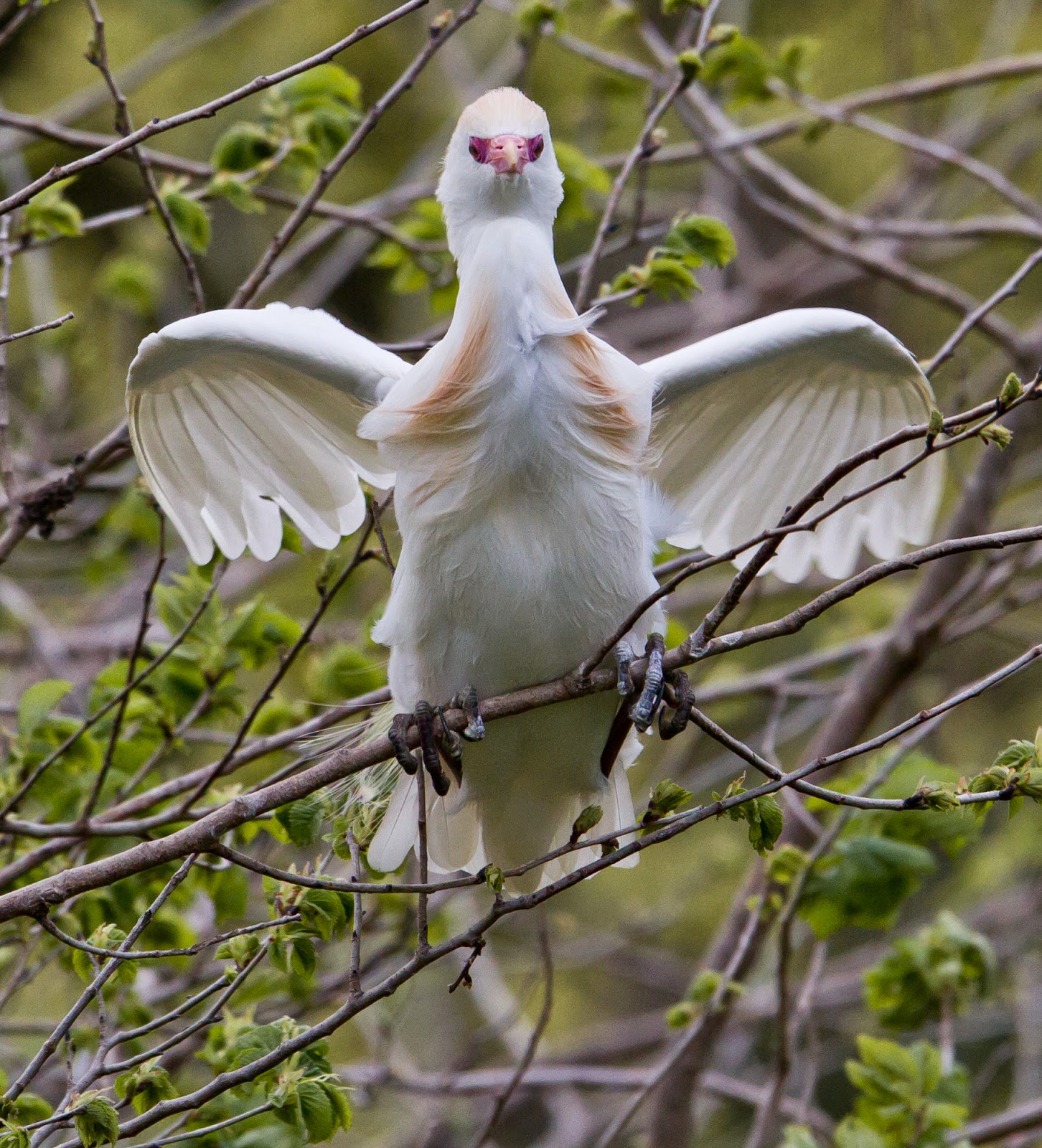
We came across several large colonies of Cattle Egrets, including one near a Bald Ibis breeding site where over 200 birds were gathered in a few small trees

We had a fantastic Slender-billed Gull gathering on our visit to Bonanza Salt Pans, where perhaps 800 birds were gathered in large flocks, including many with Darvic rings

We had several sightings of singing male Little Bustards during our travelling around the northern area of Cadiz, and this bird was one of a pair that were flushed by a Montagu's Harrier, and flew directly over the main road!

A selection of passerine images:


Corn Buntings

Nightingale

Whinchat


Little Swifts

Western Sybalpine Warbler

Crested Lark

Red-rumped Swallow


Iberian Yellow Wagtail