Showing posts with label Goldcrest. Show all posts

Friday, 1 April 2016

Back on Bardsey...let Spring begin!

Last week my sister and I made the long trek up from Cornwall to North Wales by train, and managed to catch a weather window on Friday morning to be ferried across a lively Bardsey Sound by Colin back home to Bardsey Island. It was great to get back home before a bought of unsettled weather blew through over the weekend, bringing rain, wind and temperatures more akin to the depths of winter! Nevertheless, conditions have somewhat redeemed themselves in the last few days, bringing the characters of springtime emerging from every corner of the island...

I will endeavour to post more regular updates during my time on Bardsey over easter, as spring migrants arrive and a host of interesting insects emerge. I am hoping to stay on the island until late April at least, with the laxity of third uni term dictating that four exams mid-May are the only pressing needs to return south for!

So anyway, here a few highlights and images from Ynys Enlli over the last week - and what a first few days it has been!

These impressive clouds rolled over during the morning of the 25th, and provided a great opportunity for some landscapes

One of the coolest things waiting for me upon return was this dead Turtle in our compost! A day visitor had come across this unfortunate reptile a few weeks ago, and had given directions via email as to where to find it. After a getting input from a variety of people online, it was revealed that it is in fact a young Green Turtle - only the third ever recorded in Wales!
This species' range extends in a broad belt around the tropics and subtropics, and is classed as endangered by the IUCN due to the large number that get caught up in fishing gear, and also the loss of suitable beaches for nesting.


The main excitement at the moment is focussed on avian fauna, with the first few migrants arriving on the island over the last week. We have already had some of the classic spring migrants like Wheatears, Swallows and Chiffchaffs, but a host of other interesting species have been around too.

Here is a list of the avian migrants that have arrived so far - plenty more to come!
- Chiffchaff: 12th March
- Northern Wheatear: 12th March
- Manx Shearwater: 13th March
- Black Redstart: 14th March
- Blackcap: 23rd March
- House Martin: 25th March
- Sand Martin: 26th March
- Willow Warbler: 26th March
- Swallow: 29th March (first March record since 2012)
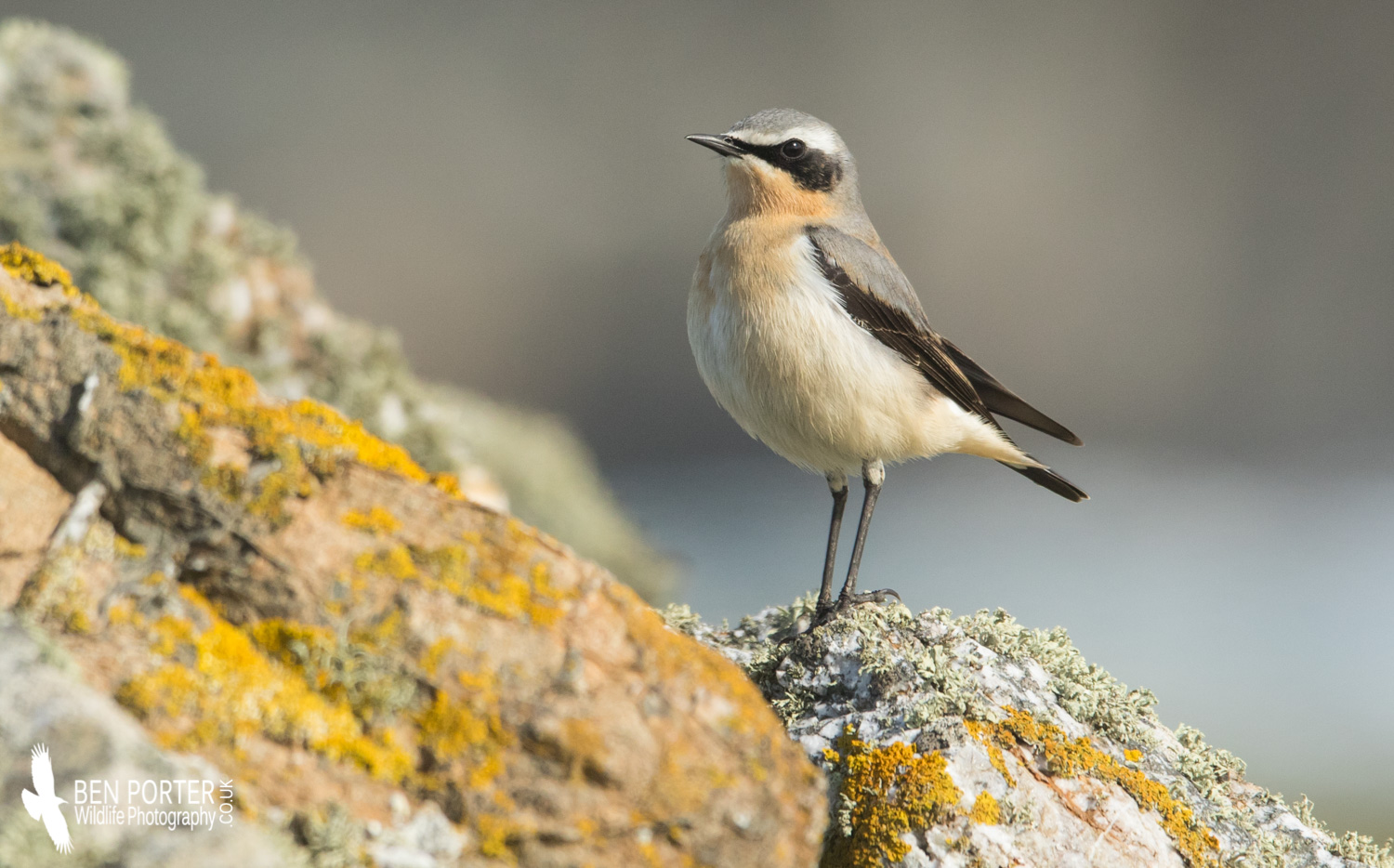
Northern Wheatear - most of the birds that have arrived so far have been males (>90%), which is partly because they will try and reach suitable breeding sites to set up their territories before females arrive

Chiffchaffs have been steadily increasing in number, with a count of 42 on the 31st being the highest total so far. Not all of the arrivals will be 'true' afro-tropical migrants, but the presence of 'pollen horns' at the base of the bill is a sure indication of the origin of some - these horns are where the feathers have stuck together due to the accumulation of pollen derived from feeding on the nectar of plants through the Mediterranean region en route

Not a species we usually conceive as being a migrant, but Stonechats also arrive in good numbers from the continent, and bring with them an impressive variety of mimicry in their punctuating songs. I couldn't quite believe it when I heard one producing a Peregrine's call, along with Sandwich Tern and Swallow!  

This utterly amazing female Long-eared Owl was trapped by Steffan in the Heligoland trap on the morning of the 31st, becoming the first to be ringed on the island since 2012! We saw the bird later in the day associating with two Buzzards, before the trio caught a thermal and worked their way up to cloud base within the space of about two minutes - who knows where it is now!
You can check out a map and table detailing recoveries of ringed Long-eared Owls in Europe by following this link to the BTO website...click here

Goldcrest numbers have been increasing when conditions dictate - yesterday, for example (31st), the island was covered in these tiny warblers, amounting to no fewer than 154 individuals! We trapped and ringed 64, and their weights varied from very light indeed (4.7g) to well-fed (5.9g). Most of the trapped birds were 2nd calendar year males, with fiery-red centres to the crest and pointy tail feathers

the island's breeding pairs of Choughs have been flying overhead with beak-fulls of various nesting materials recently. Some have been collecting bits of gorse twigs, whilst others have been gathering large white pompoms of sheep's wool - they look quite comical in flight! Hopefully the island's eight or nine pairs of breeding Choughs will have a good season


The night sky over the last two days has been breathtaking, and so I took the opportunity to try out a few night-scapes...
This image is looking south-west over Bardsey Lighthouse towards southern Ireland (the small patches of light pollution on the horizon), and the constellation of Orion is visible to the right of the South End.

The brilliant thing about being out on such a calm night is hearing the calls of the Manx Shearwaters ringing out overhead. Here is a recording of a couple of birds in their burrow...


And finally, a few insects...

Bumblebees have been appearing all over the island, particularly attracted to the pussy willows and pollen-rich buds of the Willow. Two species have been seen so far, and most sightings have involved large Queens that are seeking out a suitable site to rear a colony. This is Bombus lucorum, or the White-tailed Bumblebee

This smart Hawthorn Shieldbug was amongst the moths in my heath trap on the 29th - I haven't seen this species of shieldbug on the island before, although they are a common species elsewhere, and there is plenty of suitable habitat for them on the island

This fluffy orange caterpillar was wandering about in the grass near the plantation, and is a Buff Ermine caterpillar - it was probably looking for somewhere to pupate ready for its emergence in late Apri/early May. It will take slightly warmer temperatures than at present to encourage more species to emerge!

This curious and miniature Woodlouse is an Ant Woodlouse (Platyarthrus hoffmansegi). Amazingly, they live most of their lives underground and beneath rocks in the nests of various ant species, such as this Black Ant (Lasnius niger). It is thought that the ants tolerate their ghostly presence because they clear the next of debris and faeces. On the island, they can be found around Ty Pellaf and the Limekiln in the banks

Keep up to date with news from the island/my photography at the following sites...

Monday, 9 November 2015

Some late autumn birding

The weather has really shifted over the last week or two, and it now feels that we are truly saying goodbye to autumn, and entering the grey embraces of winter. Still, it isn't all doom and gloom, with stunning displays of colour still remaining in the form of autumnal leaves adorning the trees of broadleaf woodlands. Despite the grey, wet and windy weather experienced in the last week, there are still plenty of birds around, and this has provided plenty of interest in between lectures and revision for exams.

Winter tit-feeding flocks are becoming a familiar sight in woodlands all around the nearby reservoirs and gardens, with some lovely scarcities hiding amongst the common species. The constantly chattering gatherings of Long-tailed, Blue, Great and Coal Tits have been joined Goldcrests and Firecrests in some areas (the campus and college reservoir seem to be the best sites for these cracking birds), although the latter have been a little scarcer. It was a very nice surprise this morning (9th) to come across a smart Yellow-browed Warbler amongst a small flock on campus- not every university is able to lay claim to frequent Yellow-browed Warblers on campus!

Thrushes have now well and truly pitched up in the surrounding areas, although no doubt some proportion of the thousands of birds moving through have continued on down to winter on the nearby continent. It has been great to see holly, spruce and hawthorn bushes covered in Blackbirds, Redwings and Song Thrushes, whilst loose flocks of Fieldfares and Mistle Thrushes appear every now and then in the farmland. Skylark flocks have settled into the stubble fields adjacent to our caravan site, and a few days ago I saw a singing male Woodlark amongst them! In addition, Starlings (in far lower numbers than I would like), Chaffinches and Linnets are all making use of the stubble and newly-ploughed fields around Mawnan Smith.

To the coast, the windy and wavy weather has produced some sizeable feeding flocks of Black-headed Gulls, but I haven't been able to pick out anything particularly different as yet, besides the usual overwintering Mediterranean Gulls. I am really looking forward to when the winter divers and grebes build in number in the estuaries and bays around the coast. Perhaps the Pacific Diver will make an appearance soon?

Here are a selection of images from the last couple of weeks:

Firecrest numbers seem to have dropped off a little in the last week or two, with just the occasional bird popping up around campus, and a few tagging along in the feeding flocks around the nearby reservoirs
The Yellow-browed Warbler present at the bottom of Penryn campus this morning- the third on campus in a month!!
There are plenty of Goldcrests around, particularly around the sallows at the reservoirs

It has been really cool to watch these superb birds, as I rarely get the chance to watch Long-tailed Tits on Bardsey

Great Tit

Jays continue to stash up acorns ahead of the winter, although many of the oak trees are running out of seeds now

Third-winter Mediterranean Gull? Up to 10 can be seen on Gylly Beach in Falmouth

Black-headed Gulls

Sunday, 1 November 2015

A birding trip to Portland Bird Observatory - Part I

I have spent the last few days based in the lovely Portland Bird Observatory on the southern coast of Dorset. It has been a fantastic week of birding, moth-trapping, ringing and photography. I joined fellow 'Next Generation Birders' Josie Hewitt, Sorrel Lyall, Ephraim Perfect and Billy Stockwell to enjoy a few days at this superb location, and we all had a brilliant time. I shall try to summarise the week in a couple of blog posts, starting with the birding and ringing side of things...


I arrived in Weymouth by train on Tuesday afternoon, after a long but pleasant journey from Falmouth, meeting Sorrel and Billy at Castle Cary on the way in. We were all picked up by Josie in Weymouth, before heading along Chesil Beach causeway, over the steep hill and down the other side to the southern-most point, where Portland Bird Observatory resides in the lower lighthouse (one of three). It was dark by the time we arrived, and so there wasn't much birding to be had, but the weather was promising for the following day, and so we were eager to get out early the following morning.

28th October

Most of us were up at 0600, ready to open up the mist nets around the garden at first light. With calm conditions and clear skies, we could already hear birds passing overhead. Josie and I spent most of the morning running the various netting sites around the obs, including the double-panel nets in the nearby crop fields, where many of the passing finches were dropping into. It was a busy morning, with plenty of Goldcrests and Firecrests finding their way into the mist nets, and a few other smart birds like Starling, Reed Bunting and Linnet. In terms of passage, I logged the following numbers during the morning: eight Song Thrushes, 17 Blackbirds, 28 Goldcrests, 152 Skylarks, five Woodlarks, 25 Meadow Pipits, 123 Goldfinches, 13 Pied Wagtails, 160 Linnets, 80 Starlings, 57 Woodpigeons, one Stock Dove, four Reed Buntings, 14 Chaffinches, 15 Greenfinches, seven Firecrests, two Dartford Warblers, five Swallows, five Lapwings, a Continental Coal Tit, and a Sparrowhawk. 

Linnets and Portland Bird Obs

After this superb visible migration and a busy morning's ringing, a birder walked into the obs with news of a Pallas's Warbler in a quarry near Southwell. It isn't every year you get a chance to see these stunning little leaf warblers, and so most of us jumped at the news and head briskly off in the direction of Southwell. It took a while of scanning the large jumble of scrub and bushes before Martin Cade picked up on the bird, flitting about near the upper reaches. We all reassembled at overlooking the quarry, where we were treated to reasonable views of the beautiful little warbler at regular intervals for the rest of the afternoon. Afterwards, we headed up to Top Fields, where we were treated to fantastic views of Short-eared Owls emerging for a night's hunting at dusk. 
A great first day.

The super little Pallas's Warbler, Phylloscopus proregulus

This Short-eared Owl flew right past Ephraim and I, well before the other four birds emerged after sunset. It was brilliant to see these birds hunting on silent wings around the rank grassland around dusk

29th October

The conditions turned a little inclement on Thursday, with a howling south-westerly wind picking up during the night, and bringing with it heavy rainy until late morning. There wasn't a great deal to be seen in the earlier part of the day, although it was great to see three or four Firecrests flitting about the garden, along with plenty of Goldcrests. I headed for a walk along the coast towards the Pallas's quarry after lunch, coming across a nice selection of species along the way, including Black Redstart, lots of Kestrels, a Continental Song Thrush, 20 Skylarks, Rock Pipits, over 80 Goldfinches, a Stock Dove and an adult Mediterranean Gull. It was cool to look at the amazing geology of the landscape, with its rocky rock strata and chiselled bays. I ended up at the quarry near Southwell, where the Pallas's Warbler was still present and showing occasionally. 

We headed back up to Top Fields and Sweet Hill in the evening to look see the emerging owls hunting around the fields. We weren't disappointed, with at least five Short-eared Owls appearing and giving great views until the light faded into darkness.

Firecrests were a daily sight in the obs garden! 

There were plenty of Goldcrests about, with in excess of 50 on some days (not quite the 100s recorded last week!)

Some landscapes from around the bill

30th October

Despite a calming in the winds the previous evening, conditions were once again a bit grim in the morning, with strong winds and a dull grey covering of cloud blanketing the isle. The morning was largely spent seawatching from the obs veranda, and the following species were logged: 37 Gannets, 22 Razorbills, 29 Kittiwakes, 24 Great Black-backed Gulls and eight Common Scoters. I went for a quick walk around the coast towards the active Lighthouse on Portland Bill midday, where at least eight Black Redstarts were flitting around the beach huts and scattered boulders. On my way back from the bill, I was walking past a flock of House Sparrows near the obs quarry, when I heard an unusual call coming from above me. It took a couple of seconds before realising it was the 'tick-tick' of a bunting, which promptly appeared and dropped into the flock of sparrows in front of me. I got my bins on the bird, and was immediately treated to superb views of a LITTLE BUNTING! I watched the bird for a couple of minutes, taking a few images and trying to phone Josie (with no luck). Just at the point at which I was about to head back to the obs, the bird flew up and headed westwards, before circling around and heading over the obs and into the crop fields. Further efforts to relocate the bird unfortunately drew a blank...

I have had a mixed past with these emberizias- I have never actually seen one 'one the deck', only having brief glimpses of birds flying overhead in the murk, giving the characteristic 'tick-tick'. After perhaps three such instances, it was brilliant to finally nail one down!! Just a shame that it didn't stick around for others to see


The wind eased in the afternoon, and made for a very pleasant evening, which was again spent saw us making the daily pilgrimage to the top of Sweethill to anticipate the emergence of the owls. This particular evening was superb, with a Barn Owl shooting out from between one of the hedges, and spending the next half an hour giving sporadic views as it floated around the surrounding fields. Superb. No fewer than four Short-eared Owls appeared too, with three together in the same scope view at one point! A Little Owl could be heard calling in the distance as we watched the two larger owl species flying about.

One of the things I really enjoyed about the Portland area, in particularly the bill, was the amazing abundance of Kestrels. The density in this small area was ridiculous, with perhaps 20 individuals present within two kilometres squared! It made for some good photographic opportunities, as most of them were relatively non-plussed to human presence, remaining focussed on their small mammalian quarry as prey...

A selection of images from my stay

31st October

Our final morning was a very productive one, with a fresh south-easterly wind and clear skies encouraging a brilliant movement of migrants once again over the bill. The garden was also alive with Goldcrests and smaller passerine migrants. Josie and I opened up the nets fairly early, and hit the jack pot in the first net round, coming across a superb Pallas's Warbler hanging in one of the nets! We duly fitted a small ring to its leg, before showing the bird to a crowd of admirers, and finally releasing it once again into the obs garden. Other passerines present in the garden and surrounding bushes included a minimum of 42 Goldcrests, six Firecrests, four Redwings, five Song Thrushes, nine Blackbirds, three Chiffchaffs and two Blackcaps. 

In terms of visible migration, the sky was once again punctuated by the calls of larks, finches and other passing migrants, and so it was great fun trying to keep track of what was flying over. Frequent visits to the crop fields revealed a little more of a passage than was taking place over the obs, and I managed to note down the final tallies: 179 Starlings, 72 Skylarks, five Siskins, five alba wagtails, 15 Meadow Pipits, three Bramblings, three Reed Buntings, 79 Woodpigeons, 310 Linnets, a Lesser Redpoll and a Short-eared Owl. After a last walk up Sweethill, I packed up my few personal effects, and blagged a lift to the nearby Southwell, from where I caught a bus and said goodbye to the delightful Portland...for now at least.

Some more landscapes 

Short-eared Owl

Looking north-east to the Purbeck Heritage coast

Squabbling Great Black-backed gulls

Stonechat in front of the upper lighthouse

One of the two Little Owls that pop in and out of the holes in the obs quarry throughout the day. This bird enjoying the brief patch of sunshine at the end of a duller day

The Ringing

It was great to do some ringing whilst at the obs, helping Josie every day with the conglomeration of mist nets that are positioned around the garden and surrounding crop fields. We trapped and ringed 178 birds during our time there, including some nice species such as the Pallas's Warbler, Redwings, Starling, Reed Bunting, Song Thrushes, lots of Firecrests and Linnets to name some. By far the most numerous species was Goldcrests.

The ringing station (above), and a few of the highlights below, from top left to bottom: Firecrest, Starling, Reed Bunting, Goldcrest, Pallas's Warbler and Redwing