Showing posts with label Seabirds. Show all posts

Friday, 25 December 2015

Photographic Advent Calendar - Christmas Day! Atlantic Puffins

First of all: Happy Christmas!!! I hope you are having a great day wherever you may be, and are not beset by the same gale-force winds and lashing rain that has been presiding over the island throughout the day!

So, for my final post in the photographic advent calendar series, I have decided to focus on Britain's best-loved seabird: the Atlantic Puffin (Fratecula arctica). This comical 'clown of the sea' spends most of its life out at sea, and only descends upon our coastal islands for a few months in the spring each year. There are three species of Puffin worldwide, including the Horned and Tufted Puffins. The UK population of 'our' species, the Atlantic Puffin, stands at a little under 600, 000 pairs. Unfortunately, like so many other species of seabirds in the UK, the Puffin is experiencing population declines in the northern limits of its range, earning it a RED conservation status.

For a long time, it was a bit of a mystery where these smart little Alcids disappeared to during the winter months, but we now know that most populations disperse to feeding areas in the eastern North Atlantic, as far south as the Canary and Azores archipelagos. Some birds from the country's northern populations spend most of their time in the North Sea, but adverse weather conditions can make survival hard, forcing them to migrate to the Atlantic. Stormy weather conditions during winter months can have significant impacts on the survival of these birds; a particularly large mortality event recently occurred over the winter 2013/2014 when thousands of birds washed up along British and French coastlines.

The large, bright, comical bill of the Puffin is one of the main sources of people's love for this endearing species. This clown-like feature is really only for show, though: adult birds develop the colourful beak during the breeding season for courtship, which is then moulted and assumes a relatively small size and dark colour for the rest of the year. It takes a good five years for their beaks to develop to the mature size and structure of an adult's, growing deeper each year and acquiring several vertical grooves. This can be a useful way of ageing this species, as shown in this article.

Puffins possess an amazing ability to cram small fish into their bills for feeding their fluffy young. Indeed, they have been recorded with an immense 83 sand eels in one beak! They have several adaptation to enable them to perform this trick: the inner edge of the bill is serrated, like that of a merganser, allowing slippery fish to be gripped firmly. Secondly, an extra bone in the Puffin's jaw prevents fish from falling out from the tip. And thirdly, their jaws have a flexible hinge at the base which further facilitates this impressive ability.

So there we are, I hope you enjoyed the series!

Happy Christmas! The three wise men?

Thursday, 11 June 2015

Seabirds - the Gwylan Islands

After yesterday's events (dipping the bird of the century is not very easy to bear), I am feeling a little annoyed. I will write a post on the Cretzchmar's Bunting in the next few days, but for now here is a load of images from some recent seabird-focussed work that we have been doing.

A few days ago I visited the nearby Gwylan Islands with Steve Stansfield and Steffan Walton. The two small islands are just off Aberdaron beach, and are home to a broad variety of seabirds, and some great numbers too. We were there to carry out the annual survey of breeding bird numbers, as well as to ring as many chicks as we could.

It was a great day out, although tough at times, and we managed to get some good counts. There are well over 700 pairs of Puffins breeding on the islands, along with some 30 Shags, 12 Cormorants, 70 Greater Black-backed Gulls, Razorbills, Guillemots and Herring Gulls. After getting counts of chicks and nests for some of the species, we set about ringing many of the hatched chicks. We managed to ring approximately 30 Shag chicks, 30 Greater Black-backed Gull chicks, 20 Herring Gull chicks, a Puffin and two Razorbills. A good day's work all in all!

Although they may look very innocent, Shag chicks are very aggressive birds and can do some damage to arms, hands and fingers during the ringing process. A next of three can be lethal! This image was taken with a fisheye lens looking over towards the end of the Lleyn

With over 700 pairs of Puffins, the two small islands have a lot more than are currently present on Bardsey. This allows for some great photo opportunities, as many of the pairs have chicks and are thus regularly bringing in beak fulls of sand eels. We managed to ring one adult, but will have to make a separate trip to do any larger numbers

In contrast to Bardsey's breeding population of over 1500, the Gwylans have just a few tens of these smart birds. These images were taken on Bardsey's north-east corner, with a particularly tame population that allow a very close approach

Guillemots are also rather scarce on the Gwylans, due to an absence of large cliff faces with appropriate ledges. We have a good number on Bardsey at the moment, but many have to be viewed from a boat due to the steepness of the ground above

Lesser Black-backed Gulls are not quite as scary as Greaters' when the attack, but they can still give you a bit of a fright if you don't expect them coming!!

Friday, 5 June 2015

Storms and Seabirds

I have been quite busy in the last few days, as the weather has finally calmed down (a little bit!) and allowed for access to the island's seabird colonies on the East Side. I have been helping out counting and ringing a broad selection of species on the island's rocky cliffs. We have made some good progress in counting nests and breeding pairs, although many of the breeding species are still just a little behind in terms of ringing- almost all the auks are still on eggs. Some of our highest counts have included 30 Fulmars, two Storm Petrels, two Cormorants, 72 Shags, 267 Kittiwakes, 1000 Guillemots, 1595 Razorbills and 41 Puffins.

In addition to the breeding seabirds, it has been great to start seeing some emerging lepidoptera and insects around the island. Yesterday's very calm and sunny weather encouraged a great selection of micro and macro moths out during the day, including the year's first Thrift Clearwing, hundreds of Celypha cespitana and Lobesia littoralis, Teleiopsis diffinis, Bryotropha terrella, Elachista argentella, Rush Veneer and Pyrausta despicata. Fresh avian migrants have been very thin on the ground, although the last two days have been reasonable, with double figure counts of Spotted Flycatchers, along with a scattering of Reed Warblers, Whitethroats, Garden Warblers, Blackcaps, Chiffchaffs and Willow Warblers. A smart first summer female Red-breasted Flycatcher was great to see and ring this morning.

Here is a selection of images from the last week:

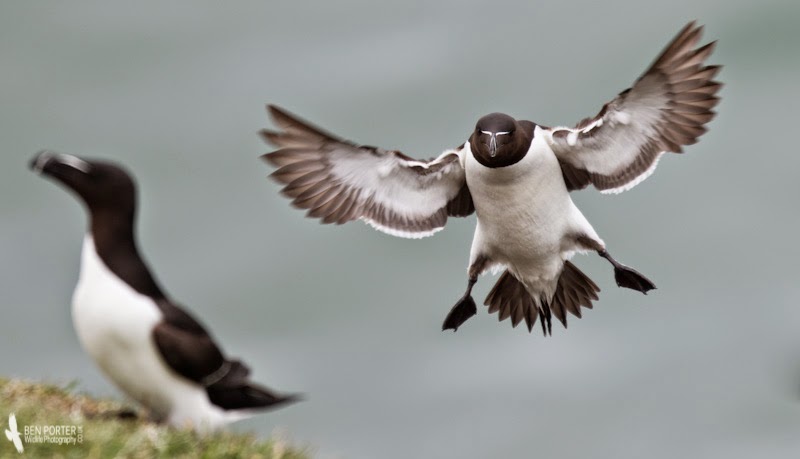
I used a Canon 15mm fisheye lens on my 7D mkII to get some close-up landscape images of these Razorbills. They were very tame and thus allowed a close proximity. This worked really well for grabbing some wide-angle shots. I hope to be able to continue this project and produce a few more interesting environmental images

The howling south-westerly gales produced some very impressive swells and rolling breakers around the coast. It was tricky to capture any decent images of passing seabirds because of their distance from the shore. This was my best attempt at a Manx Shearwater

Kittiwake on the East Side

There are a minimum of three, and perhaps as many as five pairs of Little Owls on the island this year. One or two of the pairs are quite predictable in where they show, and so some reasonable images can be taken. This bird has been sitting out on a regular perch just above our house on the mountainside. Although they are obviously nesting in one of the banks nearby, we have been unable to locate the nest as yet

It has been great to see so many Spotted Flycatchers around the island in the last few days. Some years we can have triple figure counts, but this year has been more of a steady trickle. Over 20 have been several times in the last week. 

Linnet

There are a lot of Wheatears around the coast feeding hungry chicks at the moment, and the combination of the vivid emerging thrift makes for some pretty stunning views and spectacles

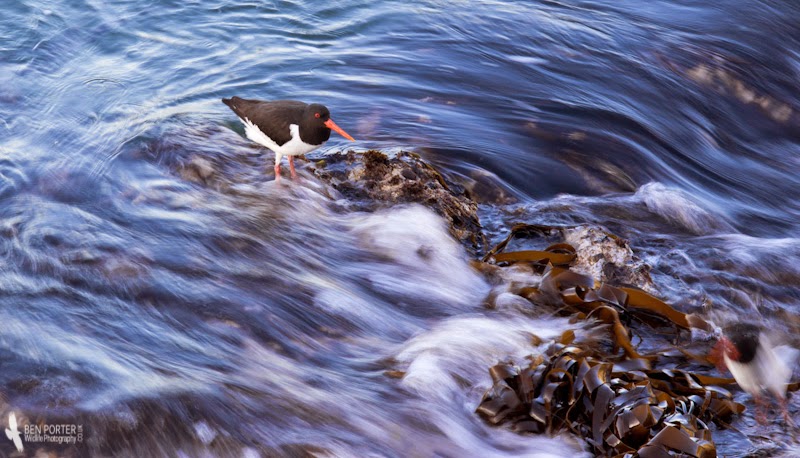
A Sanderling treading water

You can also view my images at the following links: 


Tuesday, 26 May 2015

Spring news

It has been a pleasant few weeks on the island, with a thoroughly mixed bag of weather conditions: most of the time these conditions have not at all been typical of mid-May! Strong winds with horizontal rain; chilly northerly breezes with clear skies and starry skyscapes; and then more recently calm winds, glorious sun and warm temperatures. The unsettled conditions has meant that generally the last few weeks have been very poor for migrant bird numbers on the island. Usually in May we have a few days when the island is covered in Sedge Warblers, Spotted Flycatchers and Whitethroats, but this year we have had much lower numbers- the highest day counts for these species has been 34, 25 and 25 respectively. We have had some good movements of hirundines, with over 1000 Swallows, 300 House Martins and 150 Sand Martins recorded on the 15th. A scattering of Whinchats, Yellow Wagtails, Common Redstarts, Tree Pipits and Reed Warblers has been the best of the rest.
Here are a handful of images from the last week or two:

Puffins are now incubating egss in their excavated burrows on the East Side. There have been around 40 individuals sat on the sea adjacent to the slopes on the last few visits, although there also appears to be a new colony on Pen Cristin this year
Razorbills are back in force on the island, with well over 1000 present on the rocky bouldery areas around the East Side. Many are on eggs, although we have not been able to see any chicks as yet


Oystercatchers are incubating too, although the first few nests with 'fledged' young have been recorded, so the birds will now get even more furious when people pass them by

Linnet taking a bath in a small puddle along the track

Green Tiger Beetle

Gorse Shield Bug

Garden Tiger caterpillar

Buff Tip 

Monday, 23 March 2015

European Shags

I spent some of yesterday morning photographing the Shags on the East Side. There are plenty of pairs around at the moment, all collecting nesting material from the surface of the sea (twigs, grass, dried seaweed, rope etc.), and taking this back to create their 'nest' on the seacliffs. I really love the green eyes of Shags, and the fluffy crests are very cool on some of the more mature birds. Here are some images from yesterday:


The background in these pictures is a very calm, almost silky sea, which gives the impression of cloud! I have converted these two into black and white


Tuesday, 17 March 2015

Spring is here!!

Spring has sprung! Chiffchaffs have arrived, calling from the coastal gorse and gardens; Wheatears are hopping around the coast; Wrens, Dunnocks, Stonechats and Meadow Pipits are singing; seabirds are returning to breed on the coastal sea cliffs; Daffodils and Gorse are flowering and adding a flush of yellow to the landscape; and the first few moths of the year are emerging from their winter hide-outs. 

With a nice big high pressure sat over the UK at the moment, the weather has taken a turn for the better, with calm winds from the North and East accompanied by chilly temperatures and occasional patches of bright blue sky and warming sun. The movement of migrant birds over and through the island has been very slow compared to previous years, but Chiffchaffs, Wheatears, Black Redstarts and a single Manx Shearwater have all arrived and certainly make it feel like spring has begun. Swallows and Sand Martins should be here soon, with one of the former reported over Nefyn (just up the coast) a few days ago, and a few of both moving through southern parts of the UK. Many of the island's breeding birds are 'waking up', and showing signs of nest-building and pairing up: Choughs have split up from their winter feeding flock, and are often opposite their respective nesting sites feeding away, or gathering wool and twigs for their nests. 
Here are a bunch of images taken on the island over the last week...

Wheatears have arrived! They were somewhat later than last year, with our first ones appearing on the 14th this year, compared to the 10th in 2014. Many of the first birds moving through have been stunning males such as these


This smart Snow Bunting spent a couple of days on the island from the 13th to the 14th. Last year we only had one Snow Bunting in the whole of the Spring, and that was a fly-over, so it was nice to get such good views of one so early in the year

Meadow Pipits have been moving through the island en masse in the last week, with numbers gradually building from just 473 on the 13th, and a peak count of 690 on the 14th.


Seabirds are now firmly established back on the coastal sea cliffs and many have already made a start on constructing their nests, such as the pairs of Shags collecting drifting seaweed and twigs from the sea. Hundreds of Guillemots and Razorbills are lining up on the cliff ledges and in the various boulder scree areas. Fulmars are courting and jostling for places on the grassy ledges...
Guillemots, with a smart 'Bridled' Guillemot standing out amongst the crowd in the lower image


Fulmars showing off their aerial prowess, with such a graceful flight. In the lower image, I tried using a lower shutter speed (1/100th) to capture the speed of the birds in flight. It is a little different and not totally sharp unfortunately

A pair of Herring Gulls

Common garden birds such as Dunnocks, Wrens and Robins are making up the largest contribution to the chorus of bird song at the moment. 

Oystercatchers have started splitting off from the overwintering flock, and settling in pairs around the coast at their various nesting sites and territories

With lambing now underway, many of the corvids are making use of the free meals lying around the fields, in the form of...many things.

Ravens are also making use of the free meals, and it is a very good year for this species on Bardsey. With as many as 12 birds on any one day at the moment, there are at least two pairs hanging around the coast at the moment, and some have been showing very well

Pied Wagtails have been returning to their respective nesting sites and territories

Hooded Crow

Just the one pair of Shelducks have been present on the island, which is a bit worrying, as usually there are three to four pairs of birds at this time of year, ready for breeding a little later on in the Spring. They had an appalling year breeding on the island last year, with just two broods, and no surviving chicks