
Spring has sprung! Chiffchaffs have arrived, calling from the coastal gorse and gardens; Wheatears are hopping around the coast; Wrens, Dunnocks, Stonechats and Meadow Pipits are singing; seabirds are returning to breed on the coastal sea cliffs; Daffodils and Gorse are flowering and adding a flush of yellow to the landscape; and the first few moths of the year are emerging from their winter hide-outs.
With a nice big high pressure sat over the UK at the moment, the weather has taken a turn for the better, with calm winds from the North and East accompanied by chilly temperatures and occasional patches of bright blue sky and warming sun. The movement of migrant birds over and through the island has been very slow compared to previous years, but Chiffchaffs, Wheatears, Black Redstarts and a single Manx Shearwater have all arrived and certainly make it feel like spring has begun. Swallows and Sand Martins should be here soon, with one of the former reported over Nefyn (just up the coast) a few days ago, and a few of both moving through southern parts of the UK. Many of the island's breeding birds are 'waking up', and showing signs of nest-building and pairing up: Choughs have split up from their winter feeding flock, and are often opposite their respective nesting sites feeding away, or gathering wool and twigs for their nests.
Here are a bunch of images taken on the island over the last week...


Wheatears have arrived! They were somewhat later than last year, with our first ones appearing on the 14th this year, compared to the 10th in 2014. Many of the first birds moving through have been stunning males such as these


This smart Snow Bunting spent a couple of days on the island from the 13th to the 14th. Last year we only had one Snow Bunting in the whole of the Spring, and that was a fly-over, so it was nice to get such good views of one so early in the year

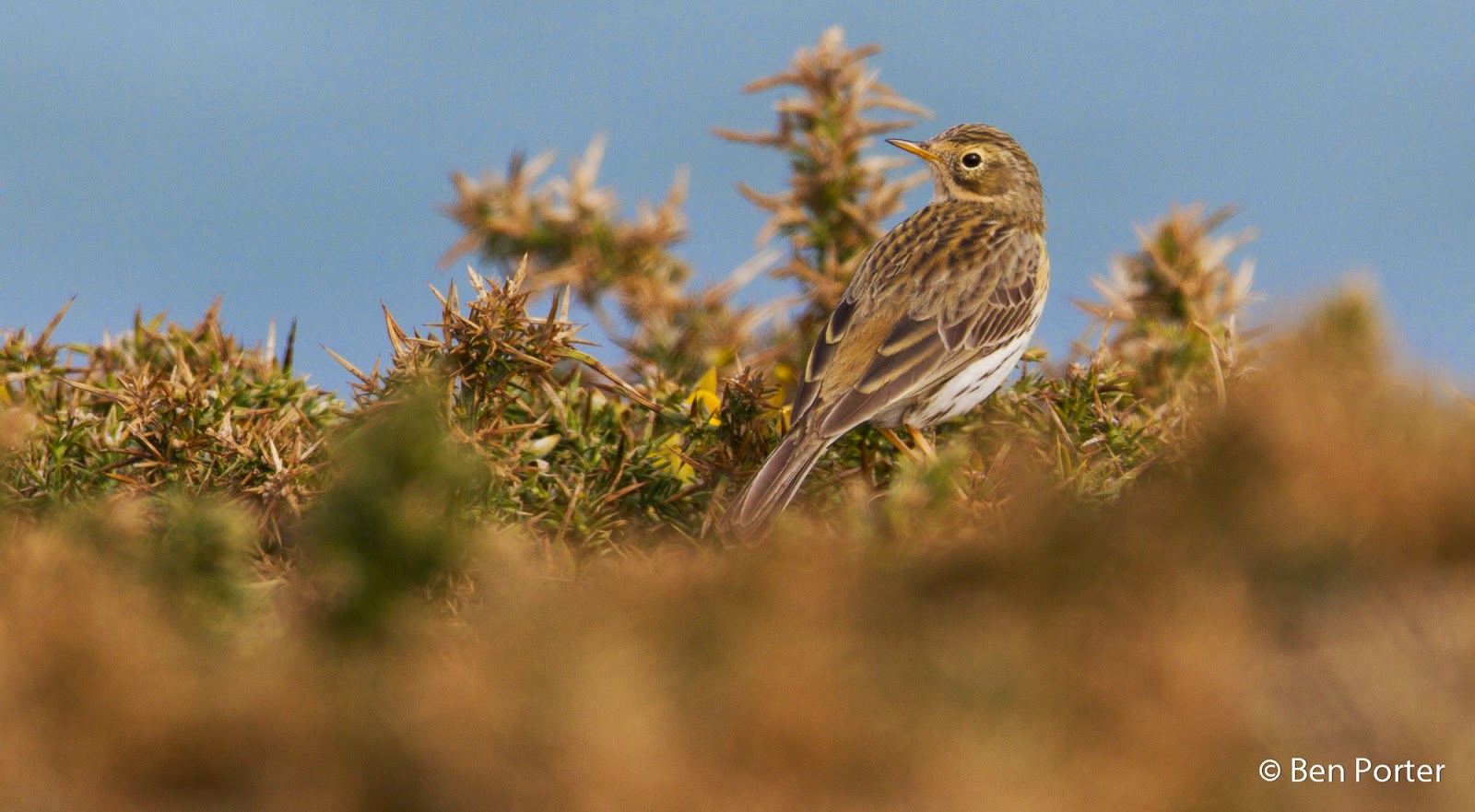
Meadow Pipits have been moving through the island en masse in the last week, with numbers gradually building from just 473 on the 13th, and a peak count of 690 on the 14th.
Seabirds are now firmly established back on the coastal sea cliffs and many have already made a start on constructing their nests, such as the pairs of Shags collecting drifting seaweed and twigs from the sea. Hundreds of Guillemots and Razorbills are lining up on the cliff ledges and in the various boulder scree areas. Fulmars are courting and jostling for places on the grassy ledges...


Guillemots, with a smart 'Bridled' Guillemot standing out amongst the crowd in the lower image


A pair of Herring Gulls

Common garden birds such as Dunnocks, Wrens and Robins are making up the largest contribution to the chorus of bird song at the moment.


Oystercatchers have started splitting off from the overwintering flock, and settling in pairs around the coast at their various nesting sites and territories

With lambing now underway, many of the corvids are making use of the free meals lying around the fields, in the form of...many things.


Ravens are also making use of the free meals, and it is a very good year for this species on Bardsey. With as many as 12 birds on any one day at the moment, there are at least two pairs hanging around the coast at the moment, and some have been showing very well

Pied Wagtails have been returning to their respective nesting sites and territories

Hooded Crow

Just the one pair of Shelducks have been present on the island, which is a bit worrying, as usually there are three to four pairs of birds at this time of year, ready for breeding a little later on in the Spring. They had an appalling year breeding on the island last year, with just two broods, and no surviving chicks


.jpg)


.jpg)
.jpg)

