Saturday, 18 April 2015

SPAIN 2015 - PART 1: Birds

As some of you may already know, I recently joined a birding trip to the south of Spain with a bunch of Next Generation Birders from around the UK (and one from Austria). The trip was organised and coordinated by Oliver Reville, who has visited the country many times, and thus knew all the sites worth visiting, the local gen, contacts within the country etc. A total of 16 people between 18 and 26 (age) headed out to Malaga on the 5th of April, and spent a week visiting as many sites as was possible from the characterful little village of Alcala de los Gazules.

It was a fantastic trip, despite quite breezy conditions to start with, and we managed to record a grand total of 178 species. Some particular avian highlights from the week include Lesser Short-toed Lark, Black-eared and Black Wheatears, Little Swifts, male Little Bustards 'farting', plenty of stunning male Montagu's Harriers, lots of raptor passage with Booted and Short-toed Eagles, Slender-billed and Auduoin's Gulls, and Red-necked Phalarope (to name but a few). I'll try and write a bit of a trip report focussed on species in the coming weeks, but since others are getting down to that task, I though I would do a couple of photographic blog posts. This first one is focussed on most bird species excluding raptors. Part 2 and 3 will follow, and will feature raptors and then invertabrate wildlife respectively.

For some more pictures from the Spanish trip, check out my Flickr album here, and also keep an eye on my 500px page here.


These Collared Pratincoles were photographed at Barbate Salt Marshes, where we had at least 60 along the side of the road and on the gravelly partitions between salinhas. Our first visit to this location was in very windy conditions with a heavy passing shower, thus the contrast in lighting in the above images!!


Kentish Plovers were relatively common at the coastal sites we visited, including Barbate and Bonanza Salt Pans. This pair allowed a close approach in a car, which gave a nice opportunity to photograph a wader that has always been a bit distant for decent images

Avocets! A rarity for me, considering I live on Barsdey for most of the year, where there has only been one record in the last ten years. It was very nice to see these smart birds, particularly at the Bonanza Salt Pans

Black-winged Stilts were a common species all over the place
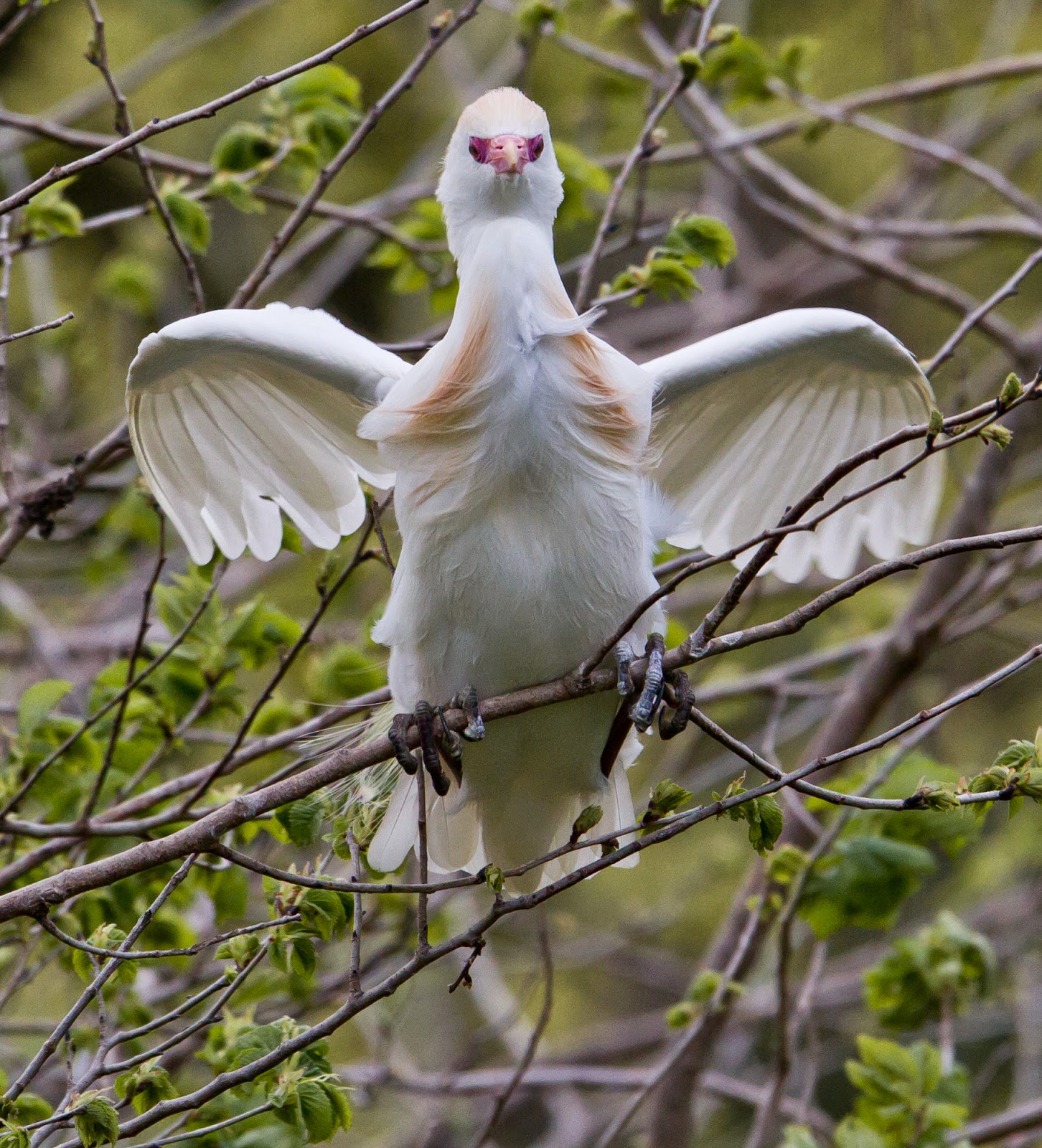
We came across several large colonies of Cattle Egrets, including one near a Bald Ibis breeding site where over 200 birds were gathered in a few small trees

We had a fantastic Slender-billed Gull gathering on our visit to Bonanza Salt Pans, where perhaps 800 birds were gathered in large flocks, including many with Darvic rings

We had several sightings of singing male Little Bustards during our travelling around the northern area of Cadiz, and this bird was one of a pair that were flushed by a Montagu's Harrier, and flew directly over the main road!

A selection of passerine images:


Corn Buntings

Nightingale

Whinchat


Little Swifts

Western Sybalpine Warbler

Crested Lark

Red-rumped Swallow


Iberian Yellow Wagtail

Tuesday, 7 April 2015

Spring Macro Images from Ynys Enlli

As Spring progresses on the island, more and more flowers are emerging and adding a bit more colour to the scenery. Daffodils have just about finished, although Dog Violets, European Gorse, Daisies and Squill are all beginning to flower and cover the island in yellows and purples. I have spent a little bit of time trying to photograph a few of these species. Here are a few results from the last week:

Backlit moss


Gorse flowers in the early morning, with dew droplets


Dog Violets

Wednesday, 1 April 2015

The weather has taken a bit of an unfortunate turn in the last week or so, after so many weeks of rather stunning conditions. Thus, the last seven days have been dominated by strong winds (largely) from the North-west, accompanied by rain showers, overcast conditions and biting temperatures. All in all, not really the ideal conditions for the northward-travelling migrants from Africa! After the arrival of our first migrants such as Chiffchaffs, Wheatears, Goldcrests and Black Redstarts a few weeks ago, there have been virtually no new arrivals since the inclement weather has moved in. There have been a few noteworthy sightings, though, with two Glaucous Gulls in the last two days and the first decent numbers of Manx Shearwaters out to sea. Despite the conditions, the breeding season continues on with those species already present: Ravens, Choughs and other corvid species continue to build nests, and many are at the lining stage now; some seabirds have completed their nests, with a few pairs of Shags already incubating their clutches; and Meadow Pipits, Blackbirds and Pied Wagtails are amongst a small selection of passerines that are also starting to build nests around the island.

A few Shags have already completed building their nests and are now incubating


Some stormy seascapes, with Herring Gull in the top image and Oystercatchers in lower

Wheatears


Linnet

Saturday, 28 March 2015

The Oystercatcher project

Over the last week I have started up a small photography project with the breeding Oystercatchers around the island's coast. Essentially, I am just trying to capture the birds with the movement of the waves and sea. To do this requires a few variables to come together: firstly, the Oystercatchers need to be on reasonably exposed rocks that are subject to the battering waves; secondly, there needs to be a good movement of the sea, and ideally some larger waves; thirdly, the tide should ideally be rising, so any Oystercatchers roosting on isolated rocks will gradually be encroached upon by the rising water. So, plenty of difficulties, and plenty of variables to come together. It's certainly a work in progress, and I have yet to get 'the one'. Here are some of the best so far:


Tuesday, 24 March 2015

Well, its been a great few days on the island for birds and photography. This has largely been helped by the settled conditions and great lighting, making it pleasant to be out when no help is needed with the lambing that is currently underway. The weather has taken a chilly, breezy and somewhat damper turn today, but we can't complain after the last few weeks of great conditions. The first Blackcap of the year arrived on the island today, and Manx Shearwaters have gradually been increasing in number at night. There were 32 Chiffchaffs and Goldcrests present at Nant yesterday, many of which I trapped and ringed, whilst Redwings, Wheatears, Stonechats, some Sand Martins and Meadow Pipits have all been on the move.

We appear to have three pairs of Little Owls on the island this year, with one on Pen Cristin, one above Plas, and one at the North End. The Plas pair have been showing quite well in the evening on occasion, which has made for some nice images

Dunnocks are in full display mode at the moment, with the males dancing around gorse bushes flashing their wings at the females. I caught this one mid way with a shutter speed of 1/2500th sec, with the early morning light backlighting the primaries and secondaries

Peregrine Falcon

Starlings flying in front of yesterday's sunset 

male Stonechat- at least six pairs are about at the moment, and some have already been gathering nesting material

Monday, 23 March 2015

European Shags

I spent some of yesterday morning photographing the Shags on the East Side. There are plenty of pairs around at the moment, all collecting nesting material from the surface of the sea (twigs, grass, dried seaweed, rope etc.), and taking this back to create their 'nest' on the seacliffs. I really love the green eyes of Shags, and the fluffy crests are very cool on some of the more mature birds. Here are some images from yesterday:


The background in these pictures is a very calm, almost silky sea, which gives the impression of cloud! I have converted these two into black and white


Saturday, 21 March 2015

Spring update

Well, its been an exciting few days on the island: on the night of the 16th, we were treated to an amazing display or aurora, with faint green curtains to the north turning into a spectacular scene once a camera and 30 second exposure were taken to it. Yesterday (the 20th), the awesome solar eclipse took place in clear blue skies between 0830 and 1000 in the morning- it was very cool to watch the whole spectacle unfold with the aid of a white light filter, my Dad's telescope and my own camera and lens. The results of the near-total eclipse are pictured below.

Its not just the meteorological side of things that have been interesting- spring is really warming up now, with moths emerging, migrants arriving, and lambs appearing. The first Sand Martins of the year have flown North over the island (18th+19th), and more and more Wheatears continue to arrive, accompanied on the 18th by some 20 Stonechats. Chiffchaffs are starting to sing, and are also increasing in number, along with Goldcrests. Finches have been on the move in the last day or so, with Goldfinches, Greenfinches, Siskins, Lesser Redpoll, Bullfinch and House Sparrow all recorded. A pair of Puffins have been seen off the North End too, which is quite early for their arrival here. Manx Shearwaters are now on the island too, and can be heard every now and then at night. I have uploaded a small selection of images from the last few days: 

This was pretty flipping awesome!! The Northern Lights from Bardsey, with the Celtic Crosses and 13th century Abbey in the foreground

The Solar eclipse was an awesome spectacle, taking place between 0830 and 1000 on the 20th. Using a white light filter in the clear blue skies, it was great to be able to get images of the sun and look directly at it. Towards the end of the eclipse some cloud rolled in and acted as a natural filter (lower image)

Honey Bees have been out collecting pollen from a variety of sources, including gorse and pussy willows (above)

I have had a small heath trap (moth trap) out in the last few days, and on the calmer nights this attracted a small range of species, including classic earlies like Dotted Border, Early Grey, Mottled Grey, Red Chestnut, Hebrew Characters and some micro moths such as Agonopterix heracliana and Emmelina monodactyla 
Hebrew Character

Early Grey

Dotted Border

Common Buzzard

Chiffchaffs have been moving through in decent numbers, although they have not arrived in true force as yet. Its been great to hear a few singing, and feeding in a classic spring setting of these pussy willows

A selection of Wheatear images taken in the last few days around the coast. It has been interesting to see how virtually all the birds at the moment are males. The first two females have only just arrived today (21st), which is over 10 days since the first males arrived on the island. This is presumably so that males can start singing and displaying on territory before the females arrive

Goldcrests

Raven flying in front of Bardsey Lighthouse