Monday, 12 September 2016

Migfest 2016 - a visit to Spurn Head

After a superb August on Bardsey, I left the island on Wednesday ahead of a period of stormy weather, and made my way to the east coast of England via a series of buses and trains. The purpose? The primary reason for my short-distance migration was in fact to take part in an event focussing on migrations of a much larger scale: I was making my first visit to the superb Spurn head in East Yorkshire to attend this year's Migfest.

In September every year, Spurn Bird Observatory plays host to a gathering of birders from all over the country - and even further afield - to come and witness the spectacle of migration at one of the UK's best hotspots for this exciting movement. The 'Migfest' weekend event includes guided walks, ringing demonstrations, moth trapping and a series of interesting talks from a range of different speakers (this year, including David La Puma from Cape May Bird Observatory and Björn Malmhagen from Falsterbo Bird Observatory). But aside this, the main focus of migfest is the birds: getting out there and witnessing hundreds of migrants passing by out to sea, whizzing south overhead in flocks or gathering in their thousands along the foreshore as the tide forces waders from their feeding spots.

the brand new bird observatory building

I arrived at Spurn after a day's travelling on Thursday evening, and it was great to meet up with young spurn-based birders Tim Jones, Jonnie Fisk and Daniel Branch, who were helping out with the running of the event. On Friday morning I awoke bright and early - the weather was clear and breezy. Not ideal for ringing (too windy for using mist nets), but the south-westerly head wind encouraged a steady passage of migrants overhead, and gave me a great introduction to 'vis-migging' (watching visible migration) on the Warren and the New Narrows (where the mainland tapers off to a fine point before the spit juts out to sea). We recorded some great numbers over the course of a few hours, the final tallies including 800+ Swallows, 1000+ Meadow Pipits, 50 Linnets, 160 Tree Sparrows, 20 Grey Wagtails, 60 House Martins, 30 Sand Martins, 20 Yellow Wagtails and 2 Greenfinches.

Tim Jones vis migin' at the warren

a steady overhead passage of Meadow Pipits resulted in 1000+ counts on Friday morning, accompanied by tight undulating flocks of Tree Sparrows.
Plenty of Sandwich Terns powering by too


There is something very special about witnessing 'raw' migration: actually seeing these tiny birds, often weighing no more than 20 grams, as they embark on a journey that can take them hundreds of miles across the globe. It's pretty remarkable really, not just the physiological demands these birds are under, but the navigational challenges they face too

It's not just passerine migrants that make for exciting visible migration: watching flocks of ducks and waders fly by is a brilliant sight in itself


Besides the overhead passage, the nearby seawatching hide was a great place to be too: seabirds and waders were flying south and north throughout the morning, and as the wind became increasingly storng during the day, some smart species were recoded. In the morning, highlights included 15 Sandwich Terns, 3 Manx Shearwaters, 11 Red-throated Divers, 15 Cormorants, plus plenty of Wigeons and Common Scoters.

Wigeons migrating with the new wind farm looming offshore


As the morning progressed, the skies remained bright blue and sunny, and the wind picked up to a fresh breeze. These conditions aren't ideal for trying to find migrants like warblers and flycatchers hiding in the vegetation, so species Willow Warblers, Whinchats, Wheatears, Spotted Flycatchers and Whitethroats were present in quite small numbers. But the conditions were great for watching another of Spurn's star attractions: the waders

Knots
Dunlin & Ringed Plovers
Ruff
Curlew


The twice-daily exposing of Humber's rich estuarine shores results in huge numbers of wintering and passage waders, which make use of the mudflat's feeding potential. During my stay at Spurn, there were several thousand Knots and many hundred Golden Plovers commuting between inland scrapes and the mudflats every day. Amongst the throng of pulsating calidrid flocks were Curlew Sandpipers, Curlews, Ringed Plovers, Dunlins, Redshanks, Sanderlings, Black-tailed and Bar-tailed Godwits and Ruffs. In winter, the numbers can surpass six-figure counts - now that must be an epic sight!

Bar-tailed Godwit

Sanderling

Ringed Plover

Ringed Plover & Dunlins

Kilnsea wetlands

One of the coolest moments on my first day had to be the sight of a juvenile Peregrine bombing out of nowhere and slicing past the shoreline where thousands of mixed waders were gathered; the Knots arose in confused and pulsating flocks, Redshanks scarpered with Dunlin in tow, Curlews spread their clumsier wings in surprise and sent water splashing. The Peregrine didn't actually manage to catch anything: juvenile birds often head to estuaries during the autumn and winter to practice and hone their hunting abilities, although flocks can often be trickier targets than individuals. It was certainly amazing to watch the reaction of hundreds of waders as it powered through and attempted to pounce on one...


I spent most of the first day wandering around and exploring the various habitats and sites that Spurn has to offer: The Point (right on the end of a 3-mile spit), The Warren (the sort of funnel before the spit, where migrants are squeezed to a point before crossing the north sea), Kilnsea wetlands and Beacon Ponds (a series of inland scrapes and tidal lagoons), and countless patches of reed beds, scrubland and stubble fields. It was great to meet up with fellow young birders who had likewise made the trip to join the event: Matt Bruce and Beth Aucott, Espen Quinto-Assman and Oli Simms. We spent the afternoon searching the coast for migrants and scanning the sea for passing terns and gulls, which included over 200 Common Terns blasting south accompanied by two Black Terns and three Little Terns, along with three Arctic Skuas, 10 Mediterranean Gulls, a Red-throated Diver and, perhaps most surprisingly, a distant Marsh Harrier! A late Common Swift shearing southward along the dunes of the point was great to see - surely no trip to Spurn is complete without seeing its most famed species? There were a few migrants to be seen in the mixed scrub in sheltered areas, including a lone Spotted Flycatcher, Willow Warblers, Whitethroats and Whinchats.

Willow Warbler

Spotted Flycatcher

Common Swift

there were over 30 Migrant Hawkers scattered around the point, and good numbers of Small Tortoiseshells, Red Admirals and Painted Ladies also passed through

looking back to Spurn and the warren from the point


After a full day in the field, Friday evening saw the official launch of migfest 2016, with a speech by Andy Clements of the BTO and then an interesting talk on the concept of 'Reverse Migration' by John Beaumont from Flamborough Bird Observatory. My first day at spurn was rounded off nicely by catching up with some old friends and new faces over some hot cheese & onion pies, followed by a drink in the Crown and Anchor.

Migfest Day 2 - Saturday 10th September

Saturday dawned calm and drizzly - not the sort of conditions that immediately spur one to jump out of bed at 6am, but myself and Will Langdon headed out nonetheless, with the hope that the conditions may have brought a few birds to ground. We walked along the edge of the 'triangle', where a handful of new arrivals presented themselves in the form of five Reed Warblers, nine Whinchats, five Sedge Warblers, a couple of Willow Warblers and some Swallows passing overhead. We made our way to the Warren, where a fair gathering of folk had been seawatching (or at least trying to in the persistent rain) for the last half-hour. We joined the group, becoming increasingly drenched as the precipitation continued unabated.


soggy seawatchers

There was just enough clarity to lock onto passing seabirds, and we collectively recorded 12 Red-throated Divers, two Manx Shearwaters, an Eider, 60+ Common Terns, a couple of Arctic Terns, 25 Sandwich Terns, 5 Mediterranean Gulls, 50+ Common Scoters, a handful of Teals and a few Gannets. At around 8am, news came over the radio of a Kentish Plover showing on the sand bank near sammy's point - a rapid exodus of the hide and seawatching party saw cars and people bomb off to see this scarce visitor - the first at Spurn since 2000. Unfortunately the bird had scarpered, and wasn't picked up again for a couple of hours, when it turned up in Kilnsea wetlands. I managed to catch up with the bird here, where it showed well on the scrape alongside the superb Wood Sandpiper, Little Egrets, Mediterranean Gulls and a handful of calidrid waders. A superb surprise was when a 3rd winter Caspian Gull dropped in - my first ever sighting of this subtly smart species, and one which I've been hoping to find back in Wales for a while (although they are a scarce bird in wales, with fewer than 3 records!).

Caspian Gull! 

This stunning Wood Sandpiper showed brilliantly throughout the event

Little Egrets

The rest of the morning was spent looking for new arrivals amongst the sodden hawthorn bushes - this produced a couple of Lesser Whitethroats, two Common Whitethroats, a couple of blackcaps and a handful of Willow Warblers - and also popping in to the main migfest hub to catch up with more birders and friends who had arrived and were taking a look at the various stalls - featuring organisations like Waderquest and the BTO, through to artwork from the likes of Darren Woodhead and Richard Thewlis. It was good to get away from the rain and warm up at intervals, but there was also plenty to be seen out in the field, and it was definitely a very enjoyable morning.

I had to head off at lunch-time on the Saturday, with a train to catch to Falmouth on Monday, so said goodbye to the brilliant team at Spurn Bird Observatory, and adios to a brilliant migration hotspot which I'll surely return to before too long. A big thanks to everyone for a great event and some good birds.


mixed waders on the beach besides Warren


Links:
- Spurn head NNR (Yorkshire Wildlife Trust)


Monday, 5 September 2016

Kittiwakes from France

This summer has seen an incredible influx of Kittiwakes to the coast around Bardsey, with flocks numbering into triple figure counts frequently alighting into the air like snowflakes! Here on the island, we often have flocks of mixed adult and juvenile Kittiwakes lounging around the coast in July and August, often settling on particular stretches of the shore. However, this year has seen consistent high numbers from around 20th July through to the end of August. Some of our highest counts have included 3266 on 21st August, 2100 on 31st August and 2000 on both 25th and 27th. Although these mega counts have been amazing, it is more the consistent daily gatherings of 600+ that have made for an impressive sight throughout August -  significantly higher numbers than previous years.


On the occasions when myself or staff from Bardsey Bird Observatory have been close enough to a settled flock to see, it has been really cool to pick out plenty of colour-ringed birds amongst them. Looking out for colour-ringed birds is a great way of contributing meaningful data to some interesting projects, and is particularly productive in estuaries with bird families like waders and gulls. On Bardsey, we don't tend to get a huge number of colour-ringed birds coming through, so it has been great to obtain combinations of around 10 Kittiwakes from the big flocks that have been loitering around the coast. A quick search on the excellent 'cr-birding' website lead me to the scheme responsible for ringing the colour-ringed birds. You can work out who to email via a number of different details, such as which leg the metal ring is on, how many colour rings there are, whether any of the rings are coded (as in Darvic rings, which often have 3 or 4 letter codes), and also which colours are used.

One of the colour-ringed Kittiwakes
Spot the colour-ringed bird!

It turned out that all the colour-ringed Kittiwakes were from the same project, based in western France. I emailed the person carrying out the project, and was pleased to get a rapid response detailing all the facts relating to 'our' birds. I have included the shortened 'fact files' below for a few of the Kittiwakes, but basically all of the birds had come from France's largest black-legged Kittiwake breeding colony in Pointe du Raz (see map for details). As the ringing scheme has been operational for over 10 years now, with hundreds of birds ringed, one could assume that a fair proportion of the birds in our monster flock have originated from this colony. This is pretty interesting, as you would otherwise be tempted to think that the flock was simply formed of birds gathered from our own breeding colony, or perhaps colonies further up the Welsh coast. 


Bird 1 - Orange/Red/Metal-Orange/Orange/Orange (Paris FX21068) - seen on Bardsey on 13/08/16
Born in pointe du Raz (Plogoff, Brittany, France) in 2009. 
First resighted in the study area in 2011. 
First breeding attempt: 2013 in it's natal colony
Sexed as female. Bred 2014
Skipped breeding 2015, but bred in 2016 in it's natal colony (on another cliff) - failed at chick stage
Last seen in Brittany on 26/07/2016

Bird 2 - Red/White/Metal-Red/Black/Black (Paris FX23518) - seen on Bardsey on 13/08/16
Born in pointe du Raz in 2013
First resighted in the study area in 2015
Established in another colony in 2016 (pointe du Van, Cléden-Cap-Sizun, Brittany, France) but did not actually breed 
Probably a male
Last seen in pointe du Van on 09/07/2016

Bird 3 - Yellow/Blue/Metal - Lime/Black/Red (Paris FX17424) - seen on Bardsey on 15/08/16

Born in pointe du Raz in 2005
Resighted every year from 2008-2016 
Breeding attempts from 2010-2013 (in its natal cliff) and 2014-2016 (in pointe du Van colony)
Sexed as a male
Failed breeding in 2016 at chick stage (colony under heavy predation by peregrines)
Last observed 11/07/2016

Bird 4 - Red/White/Metal - Red/Green/White (Paris FX17424) - seen on Bardsey on 15/08/16
Born in pointe du Raz, 2013
Resighted in 2015 & 2016 in its natal colony only
Hasn't started breeding yet, probably female
2016 : observed on 10 occasions/days from mid-April, last observed on 27/07/2016 

Bird 5 -  Yellow/Red/Metal - Blue/Blue/White (Paris FX17424) - seen on Bardsey on 15/08/16
Born in Karreg Korn (Goulien, Brittany, France) in 2002
Resighted in every year from 2005 - 2016 
Breeding in its natal cliff from 2007-2009, but failed every year
Bred in pointe du Van colony from 2010-2016 and was successfull every year
Sexed as Male
Last observed on 29/07/2016

Bird 6 - Red/White/Metal - Blue/Black/White (Paris FX23601) - seen on Bardsey on 15/08/16
Born in pointe du Raz in 2013
Resighted in 2015 & 2016

2016: established in it's natal cliff, a few meters from it's natal nest, with a 13 year old female, but did not build a nest
Last observed on 04/07/2016


Looking at the details here, it is really interesting to see the time frame within which the birds have left their colonies and travelled up to Bardsey - many within a month, some within a couple of weeks (maximum). It would be interesting to find out whether the whole flock was comprised of birds from these french colonies, or whether there is a mix from several different populations. 

One of the flocks alighted on the island's southern tip

Kittiwake in active wing moult - another interesting feature of many of the birds in the flock. A lot of the birds have been carrying out their annual moult, renewing their worn primaries with fresh feathers. Growing new feathers takes a lot of energy demand, so perhaps these birds have been finding rich feeding around the island, which is facilitating their annual moult?
There are plenty of questions to ask!


Kittiwakes are such a charismatic coastal seabird, whose wailing calls epitomises the sea for me. Unfortunately, this species is experiencing worrying declines across much of its range, particularly in large northern colonies. Kittiwake numbers in Britain and Ireland have declined by 63% between 1986 and 2014, but in some northern colonies like Orkney and Shetland, declines have been as high as 87% since 2000. In the Irish Sea, this decrease has been somewhat less marked, with small increases in some colonies even. Here on Bardsey, the population has shown slight decreases in breeding numbers in the last few decades, but recent years have seen slight recoveries to our breeding population. Last year, for instance, saw a total of 125 nests on the East Side, which was a 20% increase on 2014, but a worrying 34.5% down on the 2006-2015 figure.

Reasons for these declines could be multi-fold and complex: fisheries have impacts on the availability of their main prey - sandeels -  and new evidence is suggesting that climate change and associated changes to sea surface temperature represents a real driver to the Kittiwake declines too: the changes to sea temperatures is causing declines and changes to plankton populations, which is the main food source for sandeels. Riding the change up the foodchain, and you have a domino effect. 

It's really sad to read the figures and hear about these declines - but monitoring populations, and contributing to studies such as colour-ringing projects like this one can help to understand more about the feeding behaviour and distributions of this species' populations both during and outside of breeding seasons. This can then inform governements and fisheries on where the most important areas are for this species, perhaps resulting Marine Protected Areas in some places to at least give the Kittiwake a hand whilst we tackle the bigger issue of our changing climate.

Friday, 2 September 2016

August on Bardsey

It has been a pretty busy few weeks here on the island, and I can't quite believe how quickly time has gone - as it always seems to in summertime on Bardsey! There have been a lot of visitors staying in the island's houses, with even more day-visitors arriving and departing on the calmer days; birding has been superb, with some great arrivals and movements of migrants, bringing with them some pretty smart rarities too; we've had several young birders over at Bardsey Bird and Field Observatory, including Elliot MontiethGeorge Dunbar and Will Langdon taking part in this year's Next Generation Birder's week, followed by Espen Quinto-Ashman and Ephraim Perfect this week; I've been trying to get some snorkelling and swimming in when I've had a spare moment, seeing as it such a superb time of year to explore the coast and marvel at the wonders of the underwater world; and there are always the usual jobs to be helping out with on the farm too.

So it's been a good few weeks, and I thought I'd try and do a quick blog post to sum up some of the recent events...

The Ling Heather has been blooming on the mountain, attracting in hundreds of Bumblebees - mostly Bombus hortorum and Bombus pascuorum - along with my Dad's busy Honey Bees harvesting for this year's crop

Juvenile Willow Warblers make up the bulk of the large arrivals of common migrants at the end of August - we had a pretty amazing arrival of 731 Willow Warblers on the 23rd August!

Spotted Flycatchers have been passing through in good numbers too - the same monster Willow Warbler day saw 68 Spotted Flycatchers sallying forth from every available perch and fenceline on the island!

We've had a couple of pretty crazy days for rarities: the first was my Birthday, on the 17th August. Starting with a juvenile Long-eared Owl in Cristin Withy, Mark then found a Western Bonelli's Warbler in the Plantation - in the exact same place that I found one two years ago! We got some great views, before trapping and ringing the smart phylloscopus...later in the morning Steve Stansfield came across a Citrine Wagtail on the Narrows, which unfortunately just passed through without stopping off on our ponds...there were plenty of migrants around too, including a flock of Green Sandpipers

Our second mega birding day was dominated by Hippos - not the huge four-legged artiodactyls, but the small bill-clacking warblers in the Hippolais family. The day started with Steffan finding an Icterine Warbler skulking in the depths of the Plantation - the first since 2011! As we were gathered around looking for this eastern wanderer, Steve spotted an Ortolan Bunting chilling out in the open next to a Chaffinch! This smart juvenile Emberizia showed incredibly well, sunning itself in the morning sunshine. 
The rest of the day was a bit of blurr, but the result was basically an Observatory garden full of hippolais warblers: we think we ended up with THREE Melodious Warblers and possibly two Icterine Warblers! It spent all afternoon to work out what was going on, but it really was great to have Icterine Warbler and Melodious Warbler in the same view at times, comparing and contrasting these subtly different species. 
A pretty cool day


Some warblers (from left to right)...Melodious, Western Bonelli's, Icterine and Willow Warbler

In other news, we have managed to catch a good 30 or so Storm Petrels during the night, including several controls

There have been some brilliant sunsets recently, with calm weather prevailing for two weeks or so. This pair of Oystercatchers made for a nice silhouette against 

Some late broods of Swallows have been fledging recently, lining up in chattering bunches on fences around the island, frequently being visited by the busy parents. It is great to see the impressive aerial acrobatics when adults give their food passes to chicks mid-flight too!

Moth News

It's been a somewhat frustrating few weeks on the moth-trapping front, with several of my heath traps malfunctioning, and thus putting me out of action for a time. I managed to cross some wires in a couple of the traps and have got them into working order now, which is great. Day-flying species have included migrants like Rush Veneers, Silver Ys and the odd Hummingbird Hawkmoth, but the moth traps have been filled with the classic autumn family: rustics. Square Spot Rustics, Flounced Rustics, Common Rustics, Rosy Rustics, Six-striped Rustics.... a lot of rustics.
In amongst the common lepdioptera fare have been some great surprises: no fewer than THREE Convolvulus Hawkmoths have found their way to the island, including two on one day! Square-spot Darts, Canary-shouldered Thorns, Marbled Beauty, Annulet, Garden Pebble (the first on Bardsey since 1999) and Bee Moth have been some of the highlights. 

One of three Convolvulus Hawkmoths that have made it to Bardsey this August - amazing considering there are fewer than 20 island records of this continental wanderer

From left to right: Marbled Beauty, Garden Pebble and Sallow


Grey Seals
In other news, I've had some good fun pursuing a few long-term photography projects, and also trying out a bit more filming. One day I had the fortune of observing several Grey Seals within one of the island's coastal caves at high tide. I am very pleased with the images I managed to capture, but here is a bit of video of the playful bull blowing bubbles...


Staying on the Grey Seal theme, here are a couple of images from a fun snorkelling encounter with seven or eight very inquisitive individuals in one of the island's bays

the delightful Autumn Ladie's Tresses (a small orchid only around three or four inches high) are springing up all around the island, encouraged by specific grazing regimes in certain pastures to keep the vigorous grasses at bay

I'll end with a couple of wader shots...wader numbers and passage has been brilliant this year, with a sustained high number of species like Turnstones feeding around the Narrows at high tide. We've had as many as 80 birds on the beach, with 70+ most days, which is a superb number
Ringed Plover

Turnstone - an adult moulting out of summer plumage


That's all for now - I hope to start blogging a bit more in the coming weeks, although I expect to be fairly busy once I return to uni in Falmouth from the 12th onwards. I'm certainly looking forward to heading down to the south-west and seeing what the coast around Cornwall will have to offer. 

Tuesday, 23 August 2016

Long time no post!

Well it's been a pretty long time hasn't it? Apologies for the total lack of blogging for however many months...I have been away for much of the summer, where either a lack of internet, time or laptops has resulted in a distinct absence of blog posts here for quite some time.

Although I will get around to writing some full accounts of the places I've been and things I've seen, for now I'll just try to sum up my summer in a few sentences...back in early June, after returning to Bardsey for a week or so prior to university exams, I headed off on a family holiday to Scotland. We decided to set up camp on the delightful isles of Coll and Tiree, where we were surrounded by singing Corncrakes, quartering Hen Harriers, buzzing Snipe and piping Lapwings for a couple of weeks. I was then off to eastern Europe for the rest of the summer, working on an expedition by Operation Wallacea in the heart of Romania's stunning Transylvanian landscape. Here I would spend seven weeks running one of many different biodiversity surveys that is encompassed within the expedition: bird ringing. I took groups of students out every day to trap and ring a diverse range of bird species - showing and explaining how and why we use this technique to study bird populations, whilst at the same time trying to gain a better understanding of any changes going on within the area. I was able to join on other surveys whilst out there, from butterfly transects in lush meadows to looking for bats roosting in Saxon churches. The abundance of wildlife in a landscape so heavily maintained by traditional farming practices was breathtaking - lots more to come!

For now, a few images...

A typical Romanian scene - the village Malancrav in the Tarnavu Mare

A highlight of the trip: Brown Bear and cubs!

Bee-eater

Romanian meadow

Yellow-bellied Toad

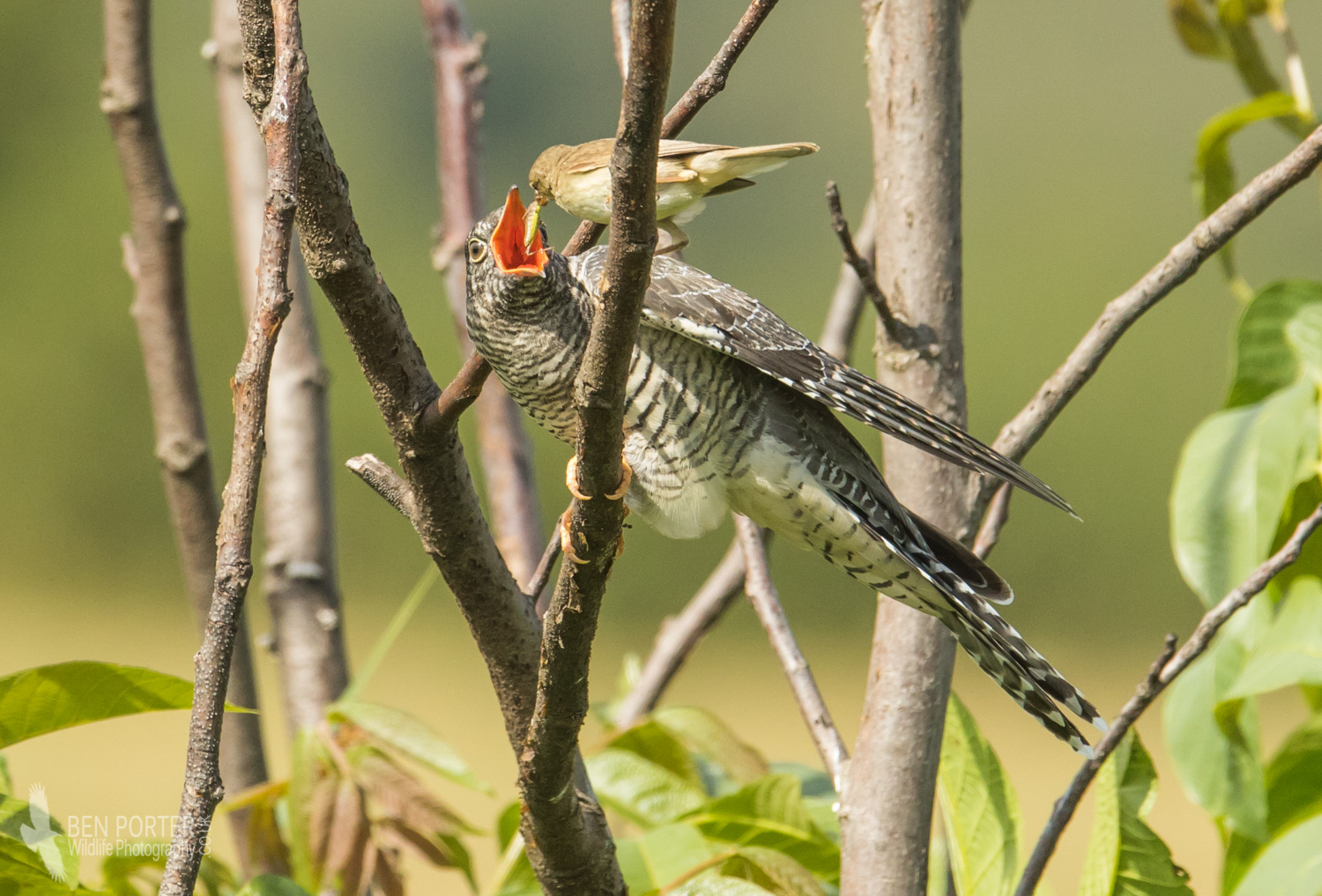
Cuckoo chick being fed by Marsh Warbler

Cows on their way out to pasture

White Storks in nest

Wild boar skull

Me with Hawfinch, and a highlight from the ringing side of things: Bee-eater!

Daia church spire at night

Aesculapian Snake

Convolvulus Hawkmoth